


SEO marketing is essential for improving website visibility, attracting organic traffic, and building long-term authority. It combines keyword research, on-page, technical, and off-page strategies to help businesses grow sustainably in competitive digital search environments.
Search engine optimization serves as the unwavering foundation of any successful digital presence. When someone types a question or need into a search bar, you want your website to be the first thing they see—this reality brings seo marketing to the forefront of every modern business strategy. The higher your pages rank in search results, the more likely you are to capture valuable attention and attract prospective customers to your business. In fact, failing to invest in search engine optimization marketing is like leaving money on the table, no matter your industry.
Understanding why seo marketing matters requires looking closely at how consumers behave online. Most digital journeys begin with a search engine. People trust these platforms to deliver the best, most relevant answers to their queries in seconds. If your website does not appear on the first page of results, you miss out on massive opportunities to connect with your target audience. Effective seo marketing builds deep trust, establishes authority, and drives consistent, high-quality organic traffic—without the recurring costs and unpredictability of paid advertising. In today’s competitive landscape, your digital marketing SEO strategy is the difference between being found and being forgotten.
The Evolution of SEO Marketing

The evolution of seo marketing represents a fascinating journey through digital history. In the early days of the internet, ranking a website was as simple as cramming as many keywords as possible onto a single page. Search engines were easily manipulated by these basic tactics and simplistic algorithms. Over time, search engine optimization marketing demanded more sophistication. Google and other search platforms updated their systems regularly to penalize spammy practices, reward sites that genuinely help users, and focus on the user’s intent. Today, successful organic search marketing revolves around deeply understanding user behavior, seamless website experiences, beneficial content, and building digital authority.
The Shift from Quantity to Quality
In the early 2000s, marketers chased after sheer volume—more keywords, more links, more pages. This approach flooded search engines with low-value content and made it hard for users to find genuine answers. Algorithm updates like Google Panda and Penguin changed the game by prioritizing content quality, penalizing black-hat tactics, and rewarding ethical search engine optimization marketing.
Now, even the best digital marketing SEO strategy must focus on:
- Content depth and originality
- User experience and navigation
- Natural language and topic coverage
- Trust signals and authoritative backlinks
- Mobile optimization and accessibility
- Fast page speed and secure browsing
The old shortcuts no longer work. Modern seo marketing demands attention to every detail that makes your site valuable and user-friendly.
Transitioning to Modern Digital Marketing SEO Strategy
Modern seo marketing requires a strategic, data-driven mindset. You can no longer rely on shortcuts or outdated advice. Instead, you must build a comprehensive digital marketing SEO strategy that aligns your business goals with user needs. This means analyzing search trends, studying competitors, testing approaches, and relentlessly adapting. Organic search marketing now demands a holistic, cross-functional view of your website—combining technical health, content quality, off-site authority, and audience engagement.
To build a solid foundation, reviewing official resources helps immensely. Check the Google SEO Starter Guide for essential basics. This resource helps ensure every aspect of your seo marketing strategy is grounded in the best practices set by search engine leaders.
Key Components of an Effective SEO Marketing Strategy
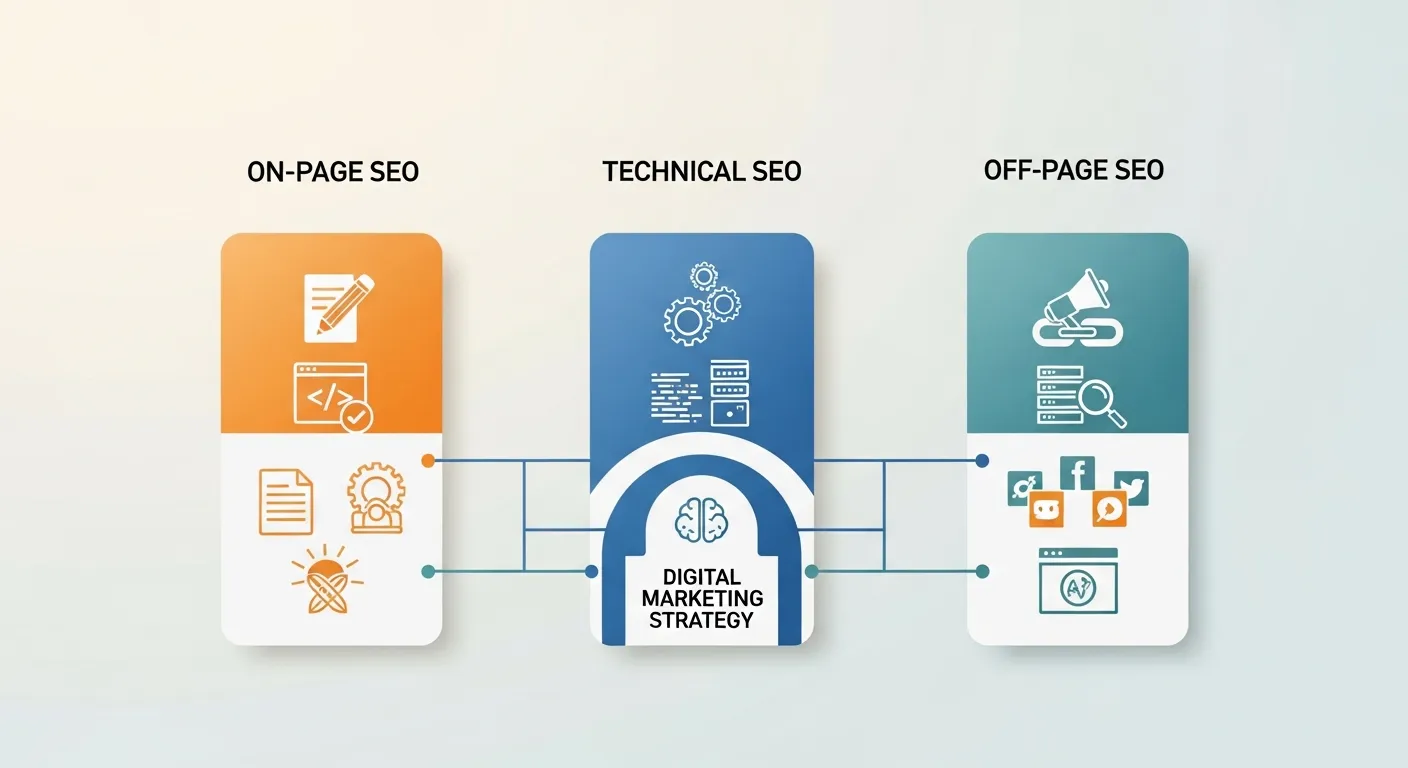
Building a robust seo marketing strategy requires a multifaceted approach. It’s not just about keywords or links—it’s about creating a digital ecosystem where every piece of the puzzle, from technical setup to content planning, supports your overall goal: visibility and growth. You must align what your audience searches for with the technical and structural elements of your website. Let us explore the core pillars of seo marketing in detail.
Keyword Research and Analysis
Everything in seo marketing starts with understanding what your audience wants to know. Keyword research is the precise process of discovering the words and phrases people use when looking for products, services, or information related to your business.
Types of SEO Keywords for Effective Organic Search Marketing
|
Keyword Type |
Description |
Example |
|---|---|---|
|
Short-tail |
1-2 broad words, high volume, high competition |
“shoes”, “insurance” |
|
Long-tail |
3+ specific words, lower volume, high intent |
“best running shoes for flat feet” |
|
Geo-targeted |
Includes location for local results |
“plumber in Chicago IL” |
|
Branded |
Relates to brand names or products |
“Nike Air Zoom Pegasus review” |
|
Question-based |
Direct questions, often voice searches |
“how do I clean white sneakers?” |
Identifying high-value keywords involves looking closely at search volume, competition, and relevance—all pillars of strong search engine optimization marketing. You want to find terms that a significant number of people search for, but where the competition is not so fierce that ranking becomes impossible. Tools such as Google Keyword Planner, SEMrush, and Ahrefs can help uncover these hidden opportunities for your seo marketing campaigns.
Long-tail keywords form a critical part of this organic search marketing process. These are longer, more specific phrases that usually have lower search volumes but much higher conversion rates. For example, a user searching for “shoes” could be at any stage of buying, but a user searching for “women’s waterproof trail running shoes size 8” has a clear purchasing intent and is ready to convert. Make these terms a core part of your SEO content marketing plan.
Tips for Effective Keyword Research in SEO Marketing
- Start by brainstorming relevant topics for your brand or product.
- Use keyword research tools to see what real users are looking for.
- Look at competitors’ websites to spot gaps and opportunities.
- Focus on a balanced mix of high-volume and high-intent keywords.
- Refresh your keyword strategy regularly to align with shifting trends.
On-Page SEO Optimization
On-page optimization refers to the precise actions you take directly on your web pages to improve their search rankings. This is a massive component of seo marketing and directly influences your website’s visibility.
Content quality and relevance stand at the absolute top of this list. Your content must thoroughly answer the user’s query and provide unique insights. Search engines monitor how long users stay on your page; if they leave immediately, it signals that your content did not meet their needs. High-quality SEO content marketing keeps users engaged and drives positive ranking signals.
Key On-Page SEO Marketing Elements
- Title Tags and Meta Descriptions: These provide the first impression in search results. A title tag should accurately describe the page’s content while including your primary seo marketing keyword. The meta description acts as a brief advertisement for your page, attracting the user to click.
- Header Tags (H1, H2, H3, H4): Headers organize your content and improve readability. Use a single H1 tag for each page’s main topic and structure content with lower-level headers for related topics and points.
- Image Optimization: Fast-loading and descriptive images help both users and search engines. Compress files for performance, use descriptive names and alt text to improve accessibility and search ranking, and make sure images are responsive for mobile users.
- Internal Linking: Build a web of related content by linking articles, guides, categories, and product pages. This supports user navigation, prolongs engagement, and spreads ranking power throughout your site.
- Content Freshness: Regularly update top-performing and cornerstone content with new statistics, insights, and answers to newly emerging questions.
Example: On-Page SEO Checklist for Digital Marketing SEO Strategy
|
Element |
Best Practice Example |
Importance |
|---|---|---|
|
Title Tag |
“Affordable Digital Marketing SEO Strategy: 2024 Guide” |
Ensures clarity and keyword targeting |
|
Meta Description |
“Learn how to create an effective seo marketing campaign. Step-by-step advice tailored for small businesses.” |
Boosts click-through from search |
|
Header Structure |
Logical H2s/H3s for easy navigation |
Improves readability and SEO |
|
Image Alt Text |
“Team working on seo marketing audit” |
Helps accessibility and rankings |
|
Internal Links |
“See our SEO content marketing guide.” |
Guides users and helps with indexing |
Technical SEO Marketing Elements
Technical seo marketing focuses on the architecture of your website. Even the best content will struggle to rank if search engines cannot crawl and index your site properly.
Site speed and mobile responsiveness are absolutely non-negotiable in modern seo marketing. Google considers both as top-ranking factors. Most internet traffic now comes from mobile devices. If your site is slow to load or difficult to navigate on a smartphone, users will bounce, and rankings will drop.
Technical SEO Essentials
- XML Sitemaps: Help search engines discover and index important content efficiently. Submit your sitemap via Google Search Console.
- Robots.txt Files: Tell search engine bots which pages to crawl or avoid—such as admin dashboards or duplicate pages.
- Schema Markup (Structured Data): Add code to highlight reviews, products, recipes, or event info. Rich snippets in search results can improve your visibility and click-through rates.
- HTTPS: Secure your website using HTTPS encryption. Google favors secure sites and users are more likely to trust you.
- Core Web Vitals: Focus on largest contentful paint (LCP), cumulative layout shift (CLS), and first input delay (FID) for a responsive, enjoyable experience.
If you need a refresher on these concepts, read more. Learn what is SEO from industry experts to understand technical health.
Off-Page SEO Marketing
Off-page seo marketing involves all activities that happen beyond the confines of your website but have a direct impact on search engine visibility. This aspect strengthens your authority in the eyes of search engines and builds your digital reputation.
Backlink building strategies remain the cornerstone of effective off-page seo marketing. High-quality backlinks from reputable, authoritative sources serve as digital endorsements. These votes of confidence communicate trust and value to search engines, helping to distinguish your site in crowded fields.
Proven Off-Page SEO Tactics for Effective Search Engine Optimization Marketing
- Guest Posting: Share your expertise on industry sites and link to relevant resources on your own.
- Digital PR: Issue newsworthy press releases and participate in expert roundups for backlink potential.
- Influencer Collaboration: Partner with thought leaders who can amplify your content and brand.
- Content Promotion: Use social platforms and forums to spread valuable content, increasing organic backlink chances.
- Business Listings: Ensure consistent info on local directories for local seo marketing impact.
SEO Marketing Pillars Overview
|
SEO Marketing Pillar |
Core Focus Area |
Primary Goal |
Key Tactics |
|---|---|---|---|
|
On-Page |
Website Content |
Improve relevance |
Keyword targeting, header structure |
|
Technical |
Backend Architecture |
Improve crawlability |
Site speed, mobile design, XML sitemaps |
|
Off-Page |
External Authority |
Build domain trust |
Backlinks, social promotion, PR |
SEO Content Marketing Integration

Content marketing and seo marketing operate side by side. While seo marketing sets technical groundwork and traffic direction, SEO content marketing fulfills user intent, builds loyalty, and powers long-term engagement.
Creating high-quality, engaging content requires deep empathy for your audience. Research their pain points, common questions, and burning needs. Your seo marketing content must be original, comprehensive, and actionable. Use formatting like bullet points, numbered steps, bold subheadings, and concise paragraphs to keep readers engaged and make information easy to scan.
Types of Content that Drive Organic Search Marketing
- Blog Posts & Articles: Provide thorough answers to frequently asked questions in your niche.
- How-to Guides: Address complex topics step-by-step to position yourself as an expert.
- Case Studies: Demonstrate the real-world impact of your product, service, or technique.
- Videos & Infographics: Cater to visual learners and support SEO content marketing with diverse formats.
- Whitepapers & eBooks: Deep dives that attract authority links and mailing list signups.
Content pillars and cluster topics help organize your website architecture. A content pillar is a broad, comprehensive guide on a core topic, such as “The Ultimate Digital Marketing SEO Strategy.” Cluster topics are smaller, focused articles that link back to the pillar page—like “How to Choose SEO Tools for Your Business.” This structure creates topical authority for organic search marketing and keeps users exploring deeper into your site.
User experience (UX) directly impacts your seo marketing success. Eliminate intrusive pop-ups, confusing navigation, or illegible fonts. User-centric design, clear calls-to-action, and logical structure should guide readers effortlessly through content.
UX in SEO Content Marketing—Checklist
|
UX Element |
Why It Matters |
SEO Benefit |
|---|---|---|
|
Clean Navigation |
Makes it easy to find content |
Increases engagement and time-on-site |
|
Responsive Design |
Accessible on all device types |
Reduces bounce rate, Google ranking factor |
|
Fast Load Speed |
Instant access to content |
Affects user happiness and SEO |
|
Accessible Fonts |
Everyone can read and interact |
Inclusive SEO content marketing |
|
Clear Calls-to-Action |
Guides users to next step |
Improves conversion and engagement |
Measuring SEO Marketing Performance
You cannot improve what you do not measure. Tracking your seo marketing performance lets you see what works, where traffic originates, and where you need to adjust your digital marketing SEO strategy.
Key SEO Marketing Metrics
- Organic Traffic: The number of users who reach your site through unpaid search.
- Keyword Rankings: Your positions for chosen terms tracked over time.
- Bounce Rate: How often visitors leave after viewing one page—lower is better.
- Average Session Duration: Longer durations suggest valuable, sticky content.
- Conversion Rate: Percentage of visitors who complete a desired action (signup, sale, download).
- Backlink Profile: The quality, quantity, and diversity of referring domains.
SEO Marketing KPIs Table
|
KPI |
Description |
Tracking Tool |
|---|---|---|
|
Organic Sessions |
Number of search-driven visits |
Google Analytics |
|
Keyword Position |
Search ranking for each focus keyword |
SEMrush, Ahrefs, GSC |
|
Referring Domains |
Number of unique domains linking to your content |
Ahrefs, Majestic |
|
Page Load Time |
Average loading speed of your site |
Google PageSpeed Insights |
|
Mobile Usability Score |
Site performance on mobile devices |
Google Search Console |
Google Analytics and Google Search Console are essential for any digital marketing SEO strategy. Analytics provides insight into user behavior, sources, and trends. Search Console highlights search performance, crawling errors, and visibility opportunities.
Regular audits keep your digital presence healthy. An audit involves reviewing technical issues, on-page SEO, and off-site factors to quickly identify bottlenecks, content gaps, or outdated information. Prioritize fixing broken links, increasing page speed, and updating cornerstone articles to sustain your organic search marketing growth.
Advanced SEO Marketing Techniques
The world of search is always changing. Staying ahead means leveraging the latest technology, following trends, and adapting your seo marketing before competitors.
Voice Search Optimization
As more people use smart speakers (Amazon Alexa, Google Home) and mobile assistants (Siri, Google Assistant), voice search optimization is no longer optional. Voice queries are typically longer and more conversational, often formatted as direct questions. Effective strategies for SEO content marketing now include:
- Targeting natural language, FAQ-style keywords and answers.
- Structuring content with semantic microdata for rich results.
- Optimizing for local intent (e.g., “best pizza delivery near me at midnight”).
The Rise of AI and Machine Learning in SEO Marketing
Google’s algorithms now utilize machine learning to understand nuance, context, and user intent on a deeper level. Rather than just matching keywords, search engine optimization marketing now requires covering topics comprehensively, using synonyms and related themes, and demonstrating expertise.
- Tools powered by AI help automate audits, keyword research, and even content creation.
- AI summaries on search results pages require unique, high-value content that stands above generic information.
Building E-A-T: Expertise, Authoritativeness, Trustworthiness
Especially in “Your Money or Your Life” niches (health, finance, legal), Google scrutinizes authorship and reputation. Tips to build E-A-T in your seo marketing:
- Display author credentials and social proof.
- Secure positive reviews on trusted platforms.
- Attract links from established authorities in your niche.
- Maintain a transparent and secure (HTTPS) website.
Video and Visual SEO Content Marketing
With YouTube being the second-largest search engine, video SEO offers enormous potential. Optimize videos with keyword-rich titles, descriptions, captions, and engaging thumbnails. Embedding videos in your blog posts increases time on page and helps you appear in blended search results.
Integrate infographics and visual guides to support complex topics—search engines index images (via alt text) and reward mixed-media content.
Common SEO Marketing Mistakes to Avoid
Even experienced marketers risk falling into traps that sabotage their seo marketing results. Avoid the pitfalls below to maintain a strong organic search marketing presence:
Most Common Errors in Search Engine Optimization Marketing
- Keyword Stuffing: Overusing keywords disrupts readability and triggers search penalties.
- Neglecting Mobile Optimization: Without a mobile-friendly design, you’ll lose traffic and rankings.
- Publishing Thin Content: Shallow, duplicate, or syndicated content offers little value.
- Ignoring Technical SEO: Unindexed pages, slow loading speed, and broken links can cripple results.
- Not Tracking KPIs: Without measurement, you can’t refine your digital marketing SEO strategy.
- Setting & Forgetting Content: Failing to refresh old posts, update statistics, and expand resources.
Effective Strategies for Ongoing SEO Marketing Success
Staying ahead in organic search marketing means sustainability and adaptability. Here’s how to make seo marketing a continuous success:
Develop a Publishing Calendar
Consistency is key in SEO content marketing. Develop a publishing schedule for new articles, updates, and multimedia. Plan seasonal or trend-based content (e.g., holiday shopping guides or “best tools of the year”).
Invest in Training and Team Collaboration
Educate your content, design, and development teams on search engine optimization marketing best practices. Align cross-departmental efforts to keep messaging, technical health, and content strategy in sync.
Experiment and Iterate
Use A/B testing for headlines, calls-to-action, and landing pages. Analyze what grows engagement or lowers bounce rate, and apply those lessons across your site.
Monitor Competitors
Stay aware of what leaders in your market are doing. Analyze their seo marketing tactics, content depth, backlink profile, and topic clusters to spot new opportunities or threats.
Engage in Community and Industry Trends
Take part in relevant forums, webinars, and social groups. Stay updated on search engine algorithm changes and emerging digital marketing SEO strategies. Subscribe to leading SEO blogs, Google announcements, and trusted resources.
Frequently Asked Questions
1. What exactly is seo marketing and why does my business need it?
SEO marketing is the process of optimizing your website to rank higher in unpaid search engine results. It drives consistent, highly targeted organic traffic, reduces your reliance on expensive paid ads, and builds long-term brand authority—all central to a winning digital marketing SEO strategy.
2. How long does it take to see results from a digital marketing SEO strategy?
SEO marketing is a long-term play. It typically takes three to six months to begin seeing noticeable improvements in rankings and traffic. Search engines require time to crawl new content, evaluate technical improvements, and assess your growing backlink profile.
3. What is the difference between on-page and off-page seo marketing?
On-page seo marketing centers on optimizing your website’s internal elements—content, headers, and meta tags. Off-page seo marketing revolves around external authority, mainly through earning backlinks from reputable websites.
4. How do I start creating SEO content marketing for my blog?
Begin by conducting in-depth keyword research to learn what your target audience searches for. Write comprehensive, user-friendly articles that answer questions and solve problems. Stay organized by consulting an ultimate SEO guide.
5. Are backlinks really that important for organic search marketing?
Yes, quality backlinks are still a major ranking factor for search engines. They act as endorsements of your site’s reliability and relevance, making your content stand out in organic search marketing.
6. Why is my website not ranking even though I use seo marketing keywords?
Effective search engine optimization marketing goes beyond keywords. If your website has performance issues, thin content, or lacks authority signals, it may not rank well. Regular site audits and improvements are crucial.
7. How can local businesses benefit from seo marketing?
Local SEO marketing practices drive foot and web traffic by emphasizing local signals. Optimize your Google Business Profile, encourage customer reviews, and use location-based keywords.
8. What tools should I use to monitor my seo marketing efforts?
Google Analytics and Search Console are must-haves for organic search marketing performance tracking.
9. Will artificial intelligence replace traditional seo marketing?
AI is evolving the seo marketing landscape but won’t eliminate its necessity. Instead, marketers must adapt with higher quality content and deeper topic coverage.
10. How often should I update my old SEO content marketing articles?
Annually review your key articles to refresh data, add new trends, and expand where necessary, as recommended by the ultimate SEO guide.
