


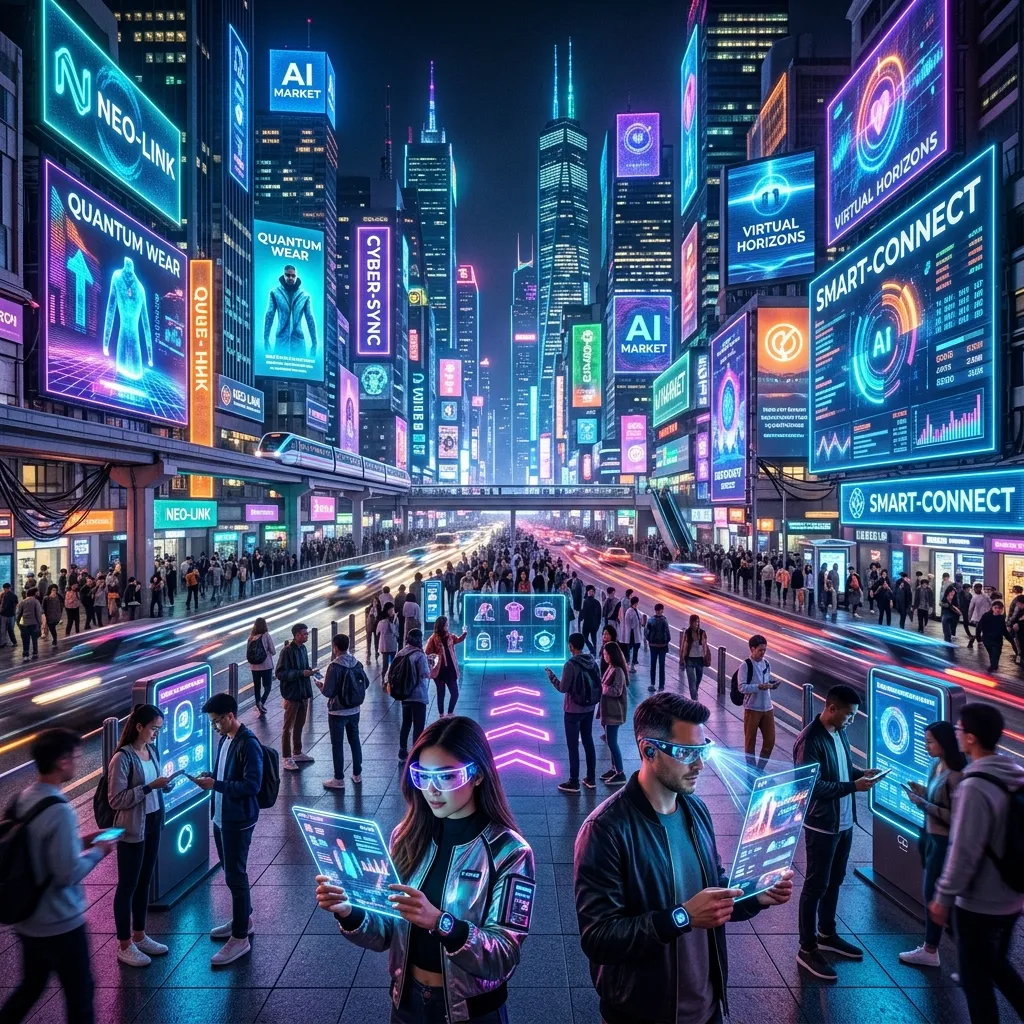
This blog explores the most important future marketing trends, including AI, hyper-personalization, privacy-first strategies, immersive experiences, influencer marketing, and sustainability, helping businesses adapt to changing consumer behavior, embrace innovation, and build competitive, future-ready marketing strategies.
The marketing landscape shifts constantly, driven by rapid technological advancements and changing consumer behaviors. Tactics that delivered exceptional results a few years ago often lose their effectiveness as audiences adapt and platforms evolve. Staying ahead of these shifts allows businesses to anticipate customer needs, optimize their resources, and maintain a competitive advantage in crowded markets. If you want to secure your brand’s position in the years to come, understanding future marketing trends is absolutely essential.
To thrive in this dynamic era, businesses must not only react to new developments but actively anticipate and prepare for them. Marketing professionals who embrace ongoing learning, adopt emerging technologies, and keep their strategies customer-centric will be well-positioned for enduring success. This means keeping a close eye on digital innovations, shifts in social platforms, evolving privacy regulations, and the ever-changing modes of content consumption.
Understanding what lies ahead helps business leaders make informed strategic decisions. Companies that ignore emerging technologies risk falling behind more agile competitors. Conversely, organizations that embrace innovation can build deeper connections with their target audiences and drive sustainable growth. Future marketing trends dictate not just where you should spend your advertising budget, but how you should communicate with your customers at every touchpoint.
This comprehensive guide will explore the most critical future marketing trends, focusing on artificial intelligence, hyper-personalization, privacy regulations, immersive experiences, and community building. By examining these areas, marketing professionals can prepare their organizations for the next era of digital engagement and ensure their marketing strategies are future-proof.
1. Artificial Intelligence (AI) in Marketing

Of all the future marketing trends, artificial intelligence (AI) continues to fundamentally change how businesses approach customer acquisition, brand visibility, and retention. What was once reserved for large enterprises is now accessible to businesses of all sizes, democratizing sophisticated marketing tactics across the board. AI platforms enable organizations to process vast amounts of data quickly, uncovering actionable insights that human analysts might miss.
How AI Enables Hyper-Segmentation and Personalization
Thanks to AI’s crunching power, marketers can move well beyond broad demographic categories and generic messaging. Machine learning algorithms analyze every interaction—from web page visits to social likes—to deliver dynamic content and highly specific product recommendations. AI-powered predictive analytics examine past purchases, engagement patterns, and even micro-moments to forecast customer behavior. This rise in precision ensures users see messages tailored uniquely to them, improving both conversion rates and customer satisfaction.
As AI models improve, expectation for real-time relevance also rises. Customers who sense brands “get” them are more likely to become loyal advocates, fueling an ongoing cycle of engagement and repeat business.
The Role of AI Chatbots in Customer Service
Customer engagement is evolving rapidly, with AI chatbots and virtual assistants driving the next wave of efficiency. Rather than facing long hold times, today’s customers interact with chatbots that provide immediate, consistent answers around the clock.
- 24/7 Availability: Customers get support when they want it, regardless of time zones or holidays.
- Cost Efficiency: AI drastically reduces operational costs while allowing support teams to focus on complex cases.
- Data Collection: Intelligent bots gather and analyze valuable zero-party data, building robust customer profiles with each interaction.
Newer chatbots also learn from conversations, growing more competent and personable over time. For marketers, this translates to better lead capture and qualification, freeing up human staff for strategic problem-solving.
Marketers Using AI for Content Creation
Marketing teams are increasingly leveraging AI for planning, generating, and optimizing content. AI writing assistants help marketers brainstorm topics, create outlines, and refine messaging based on current trends and keyword performance. Image-generation tools are now being used for creative experimentation in ad campaigns and social media. AI-driven analytics offer deep insights into which types of content resonate, enabling marketers to make data-driven decisions about what to publish and when.
Furthermore, AI platforms tailor individual customer journeys dynamically. For example, an ecommerce site might show different homepage banners or promotions based on a visitor’s browsing history or likelihood to convert. These innovations underscore why AI in marketing is at the forefront of future marketing trends.
Ethical Challenges of Using AI in Marketing
The explosion of AI-driven solutions brings powerful advantages but also significant challenges. Data privacy is an area of intense scrutiny; since AI systems require vast datasets, they often intersect with sensitive personal information. Marketers need to implement robust consent protocols and remain transparent about how customer data is stored and utilized.
Bias in AI algorithms is another concern. If historic data reflects systemic prejudices, AI can perpetuate or even amplify these biases in targeting or messaging. Upholding ethical standards in AI-driven marketing is non-negotiable for maintaining long-term trust.
2. Hyper-Personalization and the Customer Journey
As digital channels multiply and competition intensifies, the standard for customer experience has skyrocketed. Hyper-personalization is evolving from a pleasant extra to a fundamental expectation, shaping future marketing trends at every level.
Creating Individualized Customer Journeys
Gone are the days when a single journey or funnel could apply to all customers. Today, brands use advanced analytics to map and customize every stage of the journey—awareness, consideration, conversion, and retention—according to preferences and behavioral data. Personalized messaging, offers, and recommendations based on everything from purchase frequency to browsing habits drive higher engagement and loyalty.
Automation tools, often powered by AI, can trigger timely emails, SMS, or app notifications that feel conversational rather than generic. Even on physical channels, tailored experiences (such as digital in-store signage greeting repeat customers by name) are becoming reality.
Leveraging Zero-Party Data
Zero-party data, provided voluntarily by consumers through surveys, quizzes, or preference centers, is emerging as the most trusted source for hyper-personalization. Unlike third-party or even first-party data, zero-party information is accurate because it comes directly from the user. Marketers can leverage these customer-supplied insights to refine campaigns and create more meaningful experiences, ensuring compliance with privacy laws and exceeding customer expectations.
As cookie-based tracking fades, investing in mechanisms for collecting zero-party data will remain essential for effective marketing strategies.
CRM Platforms Delivering Personalized Experiences
Customer relationship management (CRM) systems are evolving to unify data from every interaction—on websites, through apps, at events, and via support channels. Modern CRM and customer data platforms (CDPs) integrate these touchpoints to deliver a 360-degree view, enabling brands to trigger unique experiences for each user. Automated workflows react to purchase triggers, lapsed engagement, or even milestones like birthdays, illustrating how deep personalization connects brands to customers authentically.
3. Privacy-First Marketing Regulations
Privacy regulations are not just legal hurdles—they’re a reflection of a growing demand for ethical marketing. As privacy-first marketing becomes a staple among future marketing trends, how brands handle data will determine their reputations.
Marketing in a Cookie-Less Future
Web browsers phasing out third-party cookies is reshaping digital advertising. Marketers must prioritize gathering first-party and zero-party data directly from consumers, building stronger relationships and trust in the process. Email lists, accounts, newsletter signups, and direct feedback will be vital for targeting audiences going forward.
Here is a breakdown of data types in the modern marketing era:
|
Data Type |
Definition |
Source |
Value for Future Marketing Trends |
|---|---|---|---|
|
Zero-Party |
Data actively and intentionally shared by the customer |
Surveys, quizzes, account preferences |
Extremely high (transparent and accurate) |
|
First-Party |
Data collected from a user’s interactions with your brand |
Website analytics, purchase history |
Very high (owned by the business) |
|
Second-Party |
First-party data shared between trusted partners |
Strategic brand partnerships |
Moderate (useful for audience expansion) |
|
Third-Party |
Data aggregated from outside sources without direct user ties |
Data brokers, tracking cookies |
Low (decreasing due to privacy laws) |
Ethical Data Collection
Navigating privacy regulations means adopting transparent, ethical consent practices. Sites must be clear about what’s being collected and why. Data minimization—gathering only what is necessary—mitigates risk. Brands also need robust data security and anonymization measures to guarantee customer trust. With increasing scrutiny, compliance isn’t just about avoiding fines; it’s fundamental to brand loyalty.
Building Brand Loyalty Through Privacy
Brands that embed privacy and transparency into their marketing strategies stand out. Offering reporting dashboards so users can see how their data is used, giving easy tools to withdraw consent, and rewarding customers for data sharing are emerging as best practices. When customers trust brands to protect their data, they are more likely to engage, provide insights, and recommend those brands to others.
4. Immersive Experiences: AR, VR, and the Metaverse

Visual engagement is rapidly shifting toward immersive, experiential content. As digital and physical worlds merge, AR, VR, and the metaverse are transforming how brands connect with and delight their audiences.
Augmented Reality and Virtual Reality Boosting Sales
AR and VR move the shopping experience from two-dimensional to interactive. Brands across retail, beauty, automotive, and even real estate invite customers to “try before they buy.” For example:
- Virtual Try-Ons: See how glasses, clothes, or makeup look via your smartphone camera.
- 3D Furniture Placement: Preview how products fit in your home before purchasing.
- Product Animations: Engage with interactive pop-ups at events or in-store.
By reducing uncertainty, these immersive features shorten the path to purchase, reduce returns, and increase overall satisfaction. VR, meanwhile, offers virtual tours, immersive events, and groundbreaking storytelling that fosters deeper emotional connections.
The Real Marketing Potential of the Metaverse
The metaverse blurs the lines between real and digital, unlocking unprecedented routes for engagement. Brands are creating virtual stores, experiences, and branded games within metaverse environments. Participants can buy virtual goods that crossover with real products or partake in global digital events, expanding the reach of marketing far beyond geographic boundaries. This type of innovative engagement will be vital as future marketing trends continue to converge with entertainment and social spaces.
5. Interactive Content and Short-Form Video
Interactivity drives engagement, and consumers now expect to participate—rather than just observe—brand storytelling. Interactive content such as quizzes, polls, and clickable videos increases dwell times and conversion rates. Gamification, through mechanics like points or leaderboards, offers fun incentives for engagement.
Simultaneously, short form video marketing dominates attention spans. With platforms like TikTok, Instagram Reels, and YouTube Shorts, consumers gravitate toward “snackable,” instantly-gratifying videos that inform, entertain, or inspire within seconds. Discover the power of short-form video in your strategy here
As more users rely on voice search and AI-powered recommendations, optimizing video and interactive assets with natural language and relevant keywords is crucial for discovery. These content types will only become more central to future marketing trends as consumer attention fragments further.
6. Influencer and Community Marketing
Trust in traditional advertising wanes as consumers turn to peers, experts, and authentic communities. Community-first, relationship-driven strategies define future marketing trends.
The Power of Micro-Influencers for Niche Audiences
Micro- and nano-influencers may have smaller followings, but their authenticity earns higher engagement and brand trust. These individuals form tight-knit communities, offering brands highly-targeted promotional partnerships. Brands collaborating with micro-influencers can achieve ROI that outstrips celebrity campaigns—especially for products with passionate niche groups.
User-Generated Content and Brand Advocacy
Empowering customers to share their own experiences via user-generated content (UGC) transforms satisfied buyers into marketers. Contests, hashtag campaigns, and review platforms encourage customers to create and distribute brand-aligned messages, building organic social proof. Showcasing user stories in marketing campaigns amplifies authenticity and creates a sense of belonging around the brand.
The Impact of Employee Advocacy
Employee advocacy brings marketing in-house. By enabling employees to share brand messages, behind-the-scenes content, and industry insights, brands humanize their operations and extend their reach authentically. Employee-generated content is trusted, attracts talent, and reinforces a positive corporate culture—ultimately making the brand more relatable and respected.
7. Sustainability and Ethical Marketing
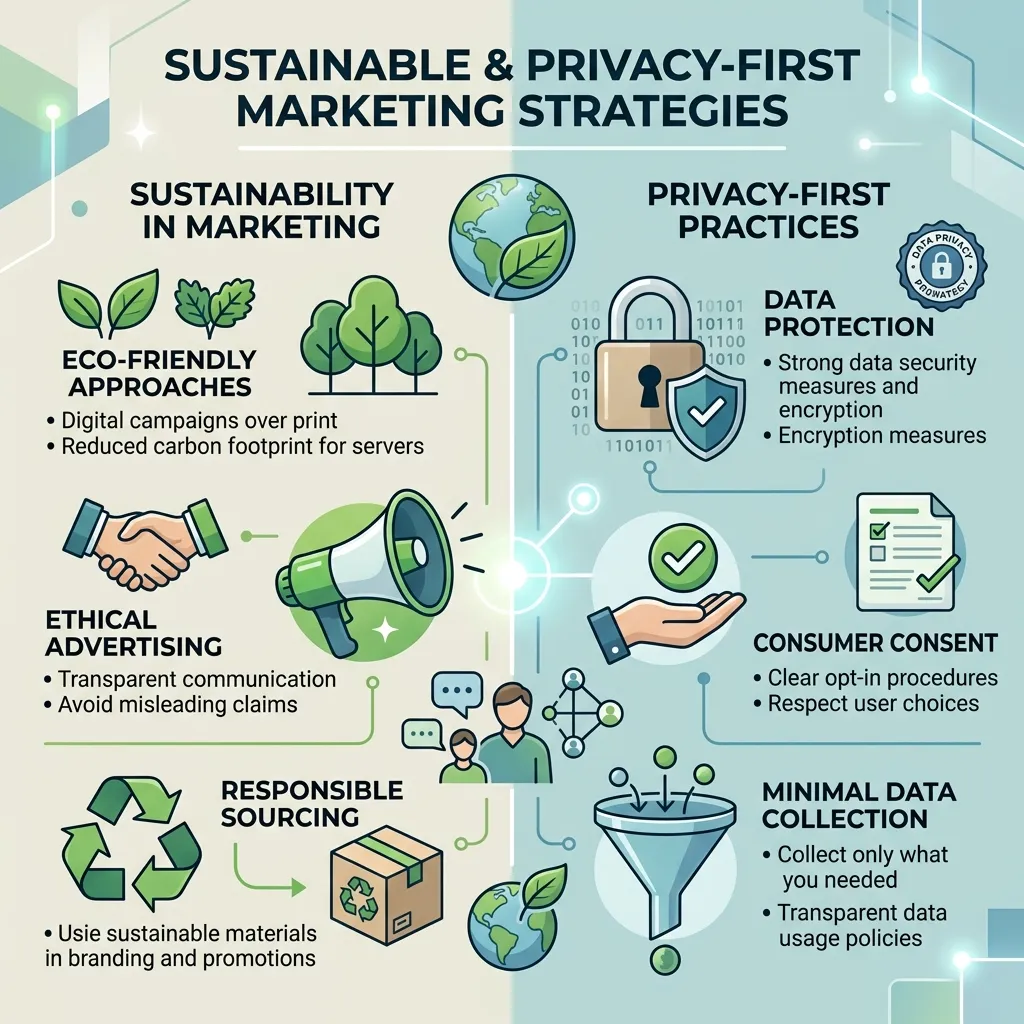
The final—and arguably most transformative—of the future marketing trends is a focus on sustainability. Brands are now evaluated as much for their values as their products.
Consumer Demand for Transparent Supply Chains
Consumers expect honesty and responsible sourcing. Transparency tools—like product traceability dashboards or impact disclosures—help brands earn loyalty from ethically-minded buyers. Explicitly communicating environmental standards and business practices, both successes and ongoing challenges, distinguishes genuinely sustainable brands from those that merely pay lip service.
Avoiding Greenwashing in Brand Messaging
With sustainability as a key purchase driver, greenwashing (making false, vague, or unsubstantiated claims) is a major pitfall. Brands must ensure every statement about eco-friendliness is backed by data, certifications, and third-party verification. Clear, credible messaging builds trust and sets a brand apart in an increasingly values-driven marketplace.
Corporate Social Responsibility as a Marketing Tool
CSR is shifting from a PR afterthought to a core brand pillar. Consumers reward companies that give back, support communities, and champion social causes. Whether it’s through charitable donations, equitable partnerships, or cultural events, CSR communications should be central to your story—not buried in the fine print.
Preparing for Future Marketing Trends
Adapting to the future of marketing requires a proactive, experiment-driven mindset. Organizations should:
- Audit their martech stacks: Ensure readiness for AI and data-driven personalization.
- Prioritize data privacy: Build processes around ethical collection and transparent use.
- Invest in staff development: Ensure teams are up-to-date on new tools and platforms.
- Test and iterate: Pilot AR, VR, and micro-influencer campaigns at small scales before investing heavily.
- Collect feedback: Use customer and employee input to refine messaging and campaigns.
Agility, ethical leadership, and a willingness to embrace change will distinguish tomorrow’s marketing leaders. By purposefully monitoring future marketing trends—and adapting strategies accordingly—you will position your organization for growth in a complex and exhilarating new era.
Frequently Asked Questions
What are the most important future marketing trends for small businesses?
Small businesses should prioritize local SEO, personalized email marketing, and short-form video content. These future marketing trends require lower financial investment but yield incredibly high engagement. Leveraging micro-influencers in your local area also provides excellent return on investment.
How is AI in marketing changing content creation?
AI in marketing accelerates content drafting, ideation, and keyword research significantly. It allows marketers to scale production while analyzing data to predict what topics will perform best. However, human oversight remains vital to ensure the brand’s unique voice and emotional resonance are preserved.
What does a cookie-less future mean for advertisers?
A cookie-less future means browsers will no longer support third-party tracking data, fundamentally altering targeted advertising. Advertisers must adapt to these future marketing trends by collecting first-party data directly from their users through newsletter signups, accounts, and interactive site features.
Why is voice search optimization becoming a major trend?
With the rise of smart speakers and mobile assistants, consumers are searching using natural, conversational language. Voice search optimization ensures your content answers these specific, long-tail queries directly. Failing to optimize for voice means missing out on a massive, growing segment of search traffic.
How can a brand implement sustainability without greenwashing?
Brands can avoid greenwashing by ensuring every environmental claim is backed by transparent, verifiable data and third-party certifications. Instead of using vague buzzwords like “eco-friendly,” highlight specific metrics like “reduced plastic packaging by 40%.” Honesty about areas needing improvement also builds immense trust.
Are micro-influencers really more effective than celebrities?
Yes, for many brands, micro-influencers offer far better engagement rates and more authentic connections with their followers. Their audiences are usually highly niche, meaning your marketing strategies target individuals who are already interested in your specific industry or product category.
What is zero-party data and why is it valuable?
Zero-party data is information that a consumer willingly and proactively hands over to a brand, such as survey answers or purchase preferences. This data is incredibly valuable because it is perfectly accurate and fully compliant with privacy laws, fueling the hyper-personalization future marketing trends demand.
How do AR and VR impact e-commerce marketing strategies?
AR and VR remove the friction of online shopping by allowing customers to visualize products in their own space or try on items virtually. These immersive marketing strategies drastically reduce return rates and increase consumer confidence, making the digital shopping experience feel tangible.
What role does employee advocacy play in future marketing trends?
Employee advocacy turns your workforce into a trusted marketing channel. Consumers trust recommendations from everyday employees far more than corporate branded accounts. Encouraging staff to share their expertise online humanizes your brand and expands your organic reach exponentially.
How much should a company budget for AI and new marketing tech?
Budgets vary entirely based on the size of the organization, but a good rule of thumb is allocating 10-15% of your total marketing budget to testing new technologies. This allows you to experiment with future marketing trends safely without compromising your core, proven marketing strategies.
