
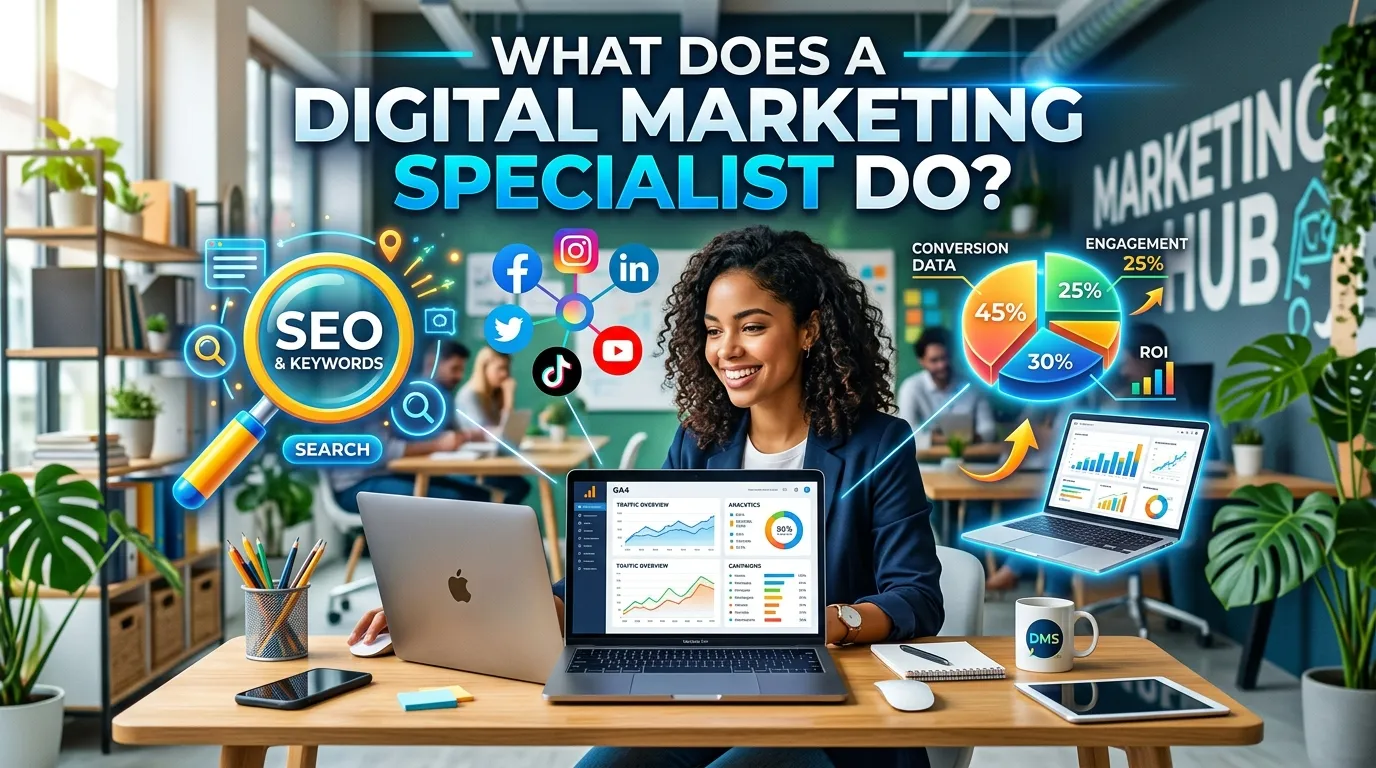
Learn what a digital marketing specialist does, including managing SEO, social media marketing, paid ads, email campaigns, and online marketing strategies. This guide explains daily responsibilities, essential skills, tools, career paths, and how specialists drive measurable business growth.
Curious about a career that blends creativity, data, and real business impact? The role of a digital marketing specialist might be exactly what you are looking for. Companies of every size need skilled people to reach customers online, and this job sits right at the center of that demand.
This guide answers one core question: what is a digital marketing specialist do on a daily basis, and how do they help businesses grow? We break down the responsibilities, skills, tools, and career paths in plain language. Whether you want to hire one or become one, you will find clear answers here.
Here is what you will walk away with:
- A clear picture of the role and daily tasks
- The key skills and tools that matter most
- A handy table of responsibilities and channels
- Honest answers to the questions people ask most
Let us dig into one of the most in-demand jobs in modern business.
What Is a Digital Marketing Specialist?

A digital marketing specialist is a professional who promotes brands, products, and services through online channels. They use websites, search engines, social platforms, email, and ads to attract customers and drive sales. In short, they help businesses get found and chosen online.
So what is a digital marketing specialist do that sets them apart from other marketers? They focus specifically on digital channels rather than traditional methods like print or billboards. Their work is measurable, data-driven, and constantly evolving with new tools and trends.
These specialists often wear many hats. One day they might write content, the next they could analyze ad performance or plan a social media campaign. This variety makes the role exciting and keeps the work fresh, but it also demands a broad skill set.
Why This Role Matters
Businesses live and die by their ability to reach customers. With more people shopping, searching, and socializing online than ever, companies need experts who understand these spaces. A digital marketing specialist fills that gap with focused skill.
This role also delivers measurable value. Unlike traditional marketing, where results can be hard to track, digital marketing shows exactly what works. Specialists prove their impact with clear numbers, which makes them valuable to any organization.
How the Role Has Evolved
The job has changed dramatically over the years. Early online marketing focused mostly on basic websites and email. Today, specialists handle social media marketing, paid ads, search engine optimization, video, and more. The field grows broader and more technical every year.
This evolution means the best specialists never stop learning. New platforms, algorithm updates, and tools appear constantly. Staying current is part of the job, and it keeps the work both challenging and rewarding.
What Is a Digital Marketing Specialist Do Every Day?
To truly understand the role, it helps to look at the daily work. The tasks vary by company size, industry, and focus area. Still, most specialists share a common set of responsibilities that fill their days.
A typical day blends creative and analytical work. The specialist might start by checking campaign performance, then move to writing content, planning ads, or coordinating with a team. This mix of tasks keeps the role dynamic and never dull.
Core Daily Responsibilities
Here is what a digital marketing specialist commonly handles on a regular basis:
- Planning campaigns: Mapping out strategies to reach target audiences
- Creating content: Writing posts, emails, articles, and ad copy
- Managing social media: Posting, engaging, and growing followers
- Running ads: Setting up and optimizing paid campaigns
- Analyzing data: Tracking metrics and adjusting based on results
- Improving SEO: Helping content rank higher in search engines
- Reporting results: Sharing progress with managers or clients
Balancing Strategy and Execution
A strong specialist does more than just complete tasks. They think strategically about how each action fits the bigger picture. Every post, ad, and email should support a clear business goal, whether that is leads, sales, or brand awareness.
This balance between thinking and doing defines the role. Some days lean toward planning, while others focus on hands-on execution. The ability to switch between these modes smoothly marks a skilled professional.
Collaboration With Other Teams
Digital marketing rarely happens in isolation. Specialists work closely with designers, writers, sales teams, and managers. Clear communication keeps everyone aligned and ensures campaigns run smoothly from start to finish.
This teamwork makes soft skills as important as technical ones. A specialist who communicates well and collaborates easily becomes far more effective than one who works alone in a silo.
The Main Channels a Specialist Works Across
Digital marketing spans many channels, and a specialist must understand how each one works. Knowing what is a digital marketing specialist do means knowing the platforms where their work lives. Each channel serves a different purpose in the customer journey.
Some channels attract new visitors, while others nurture existing relationships. A skilled specialist knows how to blend these channels into one connected strategy. This coordination is where real online marketing results come from.
Search Engine Optimization
Search engine optimization, or SEO, helps content rank higher in search results. When people search for products or answers, strong SEO puts a brand in front of them. This channel drives steady, long-term traffic without paying for each click.
Specialists handle SEO by researching keywords, improving content, and building site authority. It takes time to see results, but the payoff is lasting visibility that keeps working month after month.
For a deeper, beginner-friendly explanation of how search engine optimization works, one trusted resource breaks it down clearly.
Studying a solid guide like this sharpens your understanding of how search rankings work. With that foundation, a specialist can make smarter decisions that lift a brand’s visibility over time.
Social Media Marketing
Social media marketing connects brands with audiences on platforms like Instagram, Facebook, LinkedIn, and TikTok. Specialists create posts, engage followers, and build communities. This channel builds awareness and trust through regular, valuable interaction.
The work here blends creativity with strategy. A specialist plans content, joins conversations, and tracks what resonates. Strong social media marketing turns casual followers into loyal customers over time.
Paid Advertising
Paid ads deliver fast, targeted reach across search engines and social platforms. Specialists set budgets, choose audiences, and write ad copy that converts. This channel offers quick results and precise control over who sees a message.
The key skill here is optimization. A specialist watches the numbers closely and adjusts bids, targeting, and creative to stretch every dollar. Done well, paid advertising returns far more than it costs.
Email Marketing
Email remains one of the most profitable channels in online marketing. Specialists build subscriber lists, write campaigns, and nurture leads toward a sale. This direct line to an audience delivers strong returns at low cost.
Good email marketing relies on relevance and timing. Specialists segment audiences and send the right message at the right moment. This personal touch keeps subscribers engaged and ready to buy.
Content Marketing
Content marketing fuels nearly every other channel. Blog posts, videos, guides, and infographics attract and educate audiences. Specialists create this content to build trust and answer the questions customers ask.
Strong content supports SEO, feeds social media, and powers email campaigns. It is the engine behind much of digital marketing, which makes content skills essential for any specialist.
Responsibilities, Channels, and Tools at a Glance

Sometimes a quick reference makes the role clearer. The table below maps common responsibilities to the channels they touch and the types of tools a specialist uses. Use it to see how the pieces of the job fit together.
|
Responsibility |
Main Channel |
Tool Type |
Primary Goal |
|---|---|---|---|
|
Keyword research |
Search engine optimization |
SEO and keyword tools |
Higher search rankings |
|
Content creation |
Content marketing |
Writing and design tools |
Attract and educate audience |
|
Social posting |
Social media marketing |
Scheduling tools |
Build awareness and engagement |
|
Ad management |
Paid advertising |
Ad platform dashboards |
Drive fast, targeted traffic |
|
Email campaigns |
Email marketing |
Email platforms |
Nurture leads into sales |
|
Performance tracking |
All channels |
Analytics tools |
Measure and improve results |
|
Strategy planning |
All channels |
Project management tools |
Align efforts with business goals |
Notice how analytics and strategy touch every channel. That is because data and planning hold the whole operation together. A specialist uses these to connect individual tasks into a unified, results-driven approach.
This overview shows why the role demands such a broad skill set. A specialist must understand many channels and tools, then know how to combine them effectively. That blend of breadth and focus defines the job.
Key Skills Every Digital Marketing Specialist Needs
Success in this role rests on a mix of technical and personal skills. Understanding what is a digital marketing specialist do also means knowing the abilities that make the work possible. Some skills can be learned quickly, while others develop over years.
The best specialists keep growing in both areas. They sharpen technical skills to stay current and build soft skills to work well with others. This combination separates good marketers from great ones.
Technical Skills
These hard skills form the backbone of daily digital marketing work:
- SEO knowledge: Understanding how search engines rank content
- Content writing: Creating clear, persuasive copy
- Data analysis: Reading metrics to guide decisions
- Paid ads management: Running profitable campaigns
- Social media strategy: Growing and engaging audiences
- Email marketing: Building and nurturing subscriber lists
- Basic design: Creating simple, appealing visuals
Soft Skills
Technical ability only goes so far without these personal strengths:
- Communication: Explaining ideas and results clearly
- Creativity: Finding fresh ways to reach audiences
- Adaptability: Adjusting to new tools and trends
- Time management: Juggling multiple projects and deadlines
- Curiosity: A drive to keep learning and testing
Why a Mix Matters
A specialist strong in data but weak in communication struggles to share insights. One full of creative ideas but poor at analysis cannot prove what works. The role demands balance across both skill types.
This is why the best specialists invest in their whole toolkit. They learn the technical craft while building the people skills that turn good work into real influence within a company.
Tools a Digital Marketing Specialist Uses
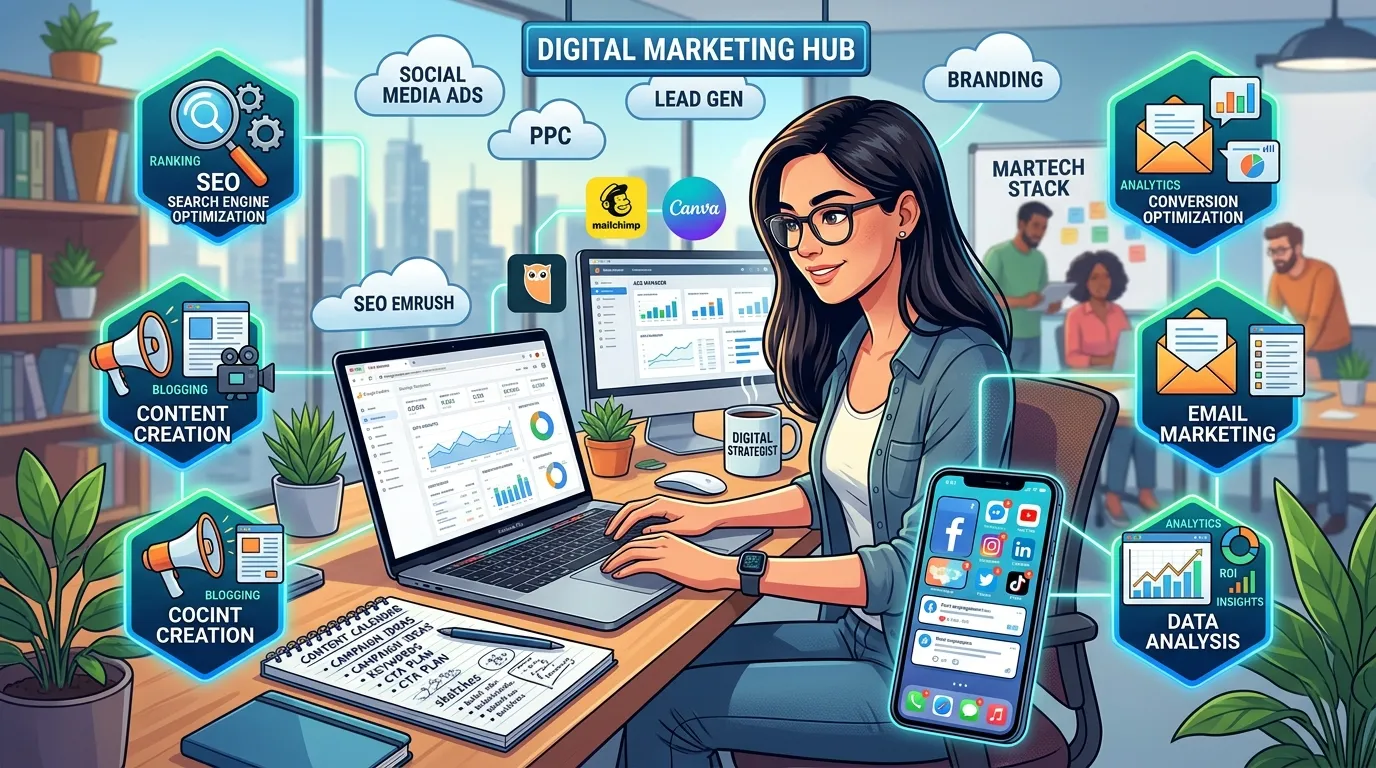
The right tools make the work faster and more effective. A specialist relies on software to research, create, manage, and measure their campaigns. Knowing these tools is a core part of the job.
You do not need to master every tool at once. Most specialists start with a few essentials, then add more as their needs grow. The goal is to pick tools that save time and improve results, not to collect every option.
Categories of Essential Tools
These tool types support nearly every part of the role:
- Analytics tools to track website traffic and campaign performance
- SEO tools to research keywords and monitor rankings
- Social media schedulers to plan and post content
- Email platforms to build lists and send campaigns
- Ad dashboards to manage paid campaigns
- Design tools to create graphics and visuals
- Project tools to organize tasks and deadlines
Choosing the Right Tools
Tool choice depends on the company and the focus area. A specialist heavy on social media needs strong scheduling and listening tools. One focused on SEO leans on keyword and ranking software. Match the tools to the work.
Start lean and upgrade only when a tool clearly earns its cost. Many free or low-cost options serve beginners well. As skills and budgets grow, premium tools can unlock deeper insights and bigger results.
How to Become a Digital Marketing Specialist
If the role appeals to you, the path to entry is more open than you might think. This field rewards skill and results over formal degrees. With focus and effort, you can break in and grow steadily.
The journey looks different for everyone, but a few clear steps guide most newcomers. Follow them in order to build a strong foundation and land your first role.
Step 1: Learn the Fundamentals
Start by learning the basics of digital marketing. Free courses, blogs, and tutorials cover SEO, social media, ads, and email. Focus on understanding how each channel works before diving deep into any one.
Set a steady learning schedule. Even an hour a day builds real knowledge over weeks. The goal is a solid grasp of the core concepts that underpin the whole field.
Step 2: Pick a Focus Area
Digital marketing is broad, so choose one area to specialize in first. You might focus on SEO, social media marketing, or paid ads. Depth in one channel makes you more valuable than shallow knowledge of all.
You can always expand later. Many specialists start narrow, build expertise, then broaden their range. This focused start gives you a clear edge when seeking your first job or client.
Step 3: Practice With Real Projects
Theory means little without practice. Build a personal blog, run a small ad campaign, or manage a social account. These hands-on projects teach lessons no course can match.
Your projects also become your portfolio. When you apply for jobs, real work proves your ability far better than certificates alone. Employers want to see what you can actually do.
Step 4: Gain Experience and Build a Portfolio
Look for internships, freelance gigs, or entry-level roles to gain real experience. Each project sharpens your skills and adds to your portfolio. Document your results to show your impact clearly.
Networking helps here too. Connect with other marketers, join communities, and share your work. Many opportunities come through relationships rather than job boards alone.
Step 5: Keep Learning and Growing
The field never stands still, so neither should you. Stay current with new tools, platforms, and trends. Read industry blogs, take advanced courses, and experiment with fresh tactics.
This habit of constant learning marks the best specialists. It keeps your skills sharp and your value high as the digital marketing landscape continues to shift.
Salary and Career Outlook
A common question alongside what is a digital marketing specialist do is how much the role pays. Salaries vary by location, experience, and company size. Still, the field offers solid earning potential and strong growth.
Entry-level specialists typically earn a modest but fair starting salary. As you gain experience and prove results, your pay climbs. Senior specialists and those with niche expertise command strong incomes.
Factors That Affect Pay
Several elements shape a specialist’s earnings:
- Experience level: More years usually mean higher pay
- Specialization: Niche skills like SEO or paid ads can pay more
- Location: Salaries differ widely by region and city
- Company size: Larger firms often pay more than small ones
- Results: Proven impact justifies higher compensation
Career Growth Paths
The role offers clear paths for advancement. Specialists can move into senior roles, become managers, or lead entire marketing teams. Others branch into consulting or start their own agencies.
The skills also transfer well. Experience in digital marketing opens doors across industries, since nearly every business needs online presence. This flexibility makes the career both stable and full of opportunity.
Common Misconceptions About the Role
Many people misunderstand what this job involves. Clearing up these myths helps you see the role more accurately, whether you want to hire or become a specialist.
It is all about social media. Social media marketing is just one piece. Specialists also handle SEO, email, ads, content, and analytics. The role is far broader than posting online.
Anyone can do it without skill. While the field is accessible, doing it well takes real expertise. Strategy, data analysis, and craft separate amateurs from professionals who drive results.
Results come instantly. Some channels work fast, but others, like SEO, take months. Effective digital marketing blends quick wins with patient, long-term efforts.
It is purely creative. Creativity matters, but data drives the best work. Specialists balance creative ideas with hard analysis to find what truly works.
Seeing the Full Picture
Once you set aside these myths, the role comes into clearer focus. A digital marketing specialist blends many skills across many channels, all aimed at measurable business growth. That breadth is what makes the job both demanding and rewarding.
Putting It All Together
You now have a complete answer to what is a digital marketing specialist do. They promote brands across online channels, blending SEO, social media marketing, paid ads, email, and content into one strategy. The role mixes creativity with data to drive real, measurable results.
The work is broad, dynamic, and always evolving. Specialists balance strategy and execution, collaborate across teams, and never stop learning. This variety keeps the job engaging and keeps skilled professionals in high demand.
If you want to enter the field, the path is clear. Learn the fundamentals, pick a focus, practice on real projects, and build a portfolio. With consistency and curiosity, you can build a rewarding career in this exciting space.
Frequently Asked Questions
What is a digital marketing specialist do in simple terms?
A digital marketing specialist promotes brands and products through online channels like search, social media, email, and ads. They plan campaigns, create content, and track results to attract customers. In simple terms, they help businesses get found and chosen online while proving their impact with clear data.
What skills do I need to become a digital marketing specialist?
You need a mix of technical and soft skills. Technical skills include SEO, content writing, data analysis, and paid ads management. Soft skills like communication, creativity, and adaptability matter just as much. The best specialists keep building both sets to stay effective in a fast-changing field.
Do I need a degree to work in digital marketing?
No degree is strictly required. This field rewards proven skills and real results far more than formal credentials. You can learn everything you need through online courses, blogs, and hands-on practice. A strong portfolio that shows your impact often matters more than any diploma to employers.
What is the difference between digital marketing and online marketing?
The terms are often used interchangeably and mean nearly the same thing. Both cover promoting brands through digital channels like websites, search, social media, and email. Some people use digital marketing more broadly to include any digital device, while online marketing focuses on internet-based efforts specifically.
How is social media marketing part of the role?
Social media marketing is one major channel a specialist manages. It involves creating posts, engaging followers, and building communities on platforms like Instagram and LinkedIn. The goal is to grow brand awareness and trust. It blends creativity with strategy to turn followers into loyal customers over time.
Why is search engine optimization important for this job?
Search engine optimization helps content rank higher in search results, driving steady traffic without paying per click. Specialists use SEO to put brands in front of people actively searching for answers or products. It takes time to see results, but the lasting visibility makes it a core part of the role.
What tools does a digital marketing specialist use daily?
Specialists rely on several tool types, including analytics, SEO, social media schedulers, email platforms, and ad dashboards. They also use design and project management tools. You do not need to master every option at once. Most start with a few essentials and add more as their needs grow.
How long does it take to become a digital marketing specialist?
Timelines vary based on your effort and starting point. With consistent learning, you can grasp the fundamentals in a few months. Building real skills and a portfolio often takes six months to a year. The field rewards practice, so hands-on projects speed up your progress significantly.
What does a typical day look like for a specialist?
A typical day blends creative and analytical work. A specialist might check campaign performance, write content, plan ads, and engage on social media. They also analyze data and report results. The mix of tasks keeps the role dynamic, and priorities shift based on company goals and active campaigns.
Is digital marketing a good career choice?
Yes, it offers strong demand, solid pay, and clear growth paths. Nearly every business needs online presence, so skilled specialists stay in high demand across industries. The work is varied and engaging, and skills transfer easily. For those who enjoy creativity and data, it is a rewarding career choice.
Can I work as a digital marketing specialist remotely?
Absolutely. Much of the work happens online, making it well suited to remote roles. Many companies hire specialists to work from home or as freelancers. This flexibility is a major draw of the field. You just need reliable internet, the right tools, and strong self-management skills.
How do specialists measure the success of their work?
Specialists track metrics tied to business goals, such as traffic, leads, conversions, and return on ad spend. They use analytics tools to see what works and what does not. This data-driven approach lets them prove their impact and adjust campaigns. Clear measurement is one of digital marketing’s biggest strengths.
Final Thoughts
Understanding what is a digital marketing specialist do reveals a role that is broad, dynamic, and deeply valuable to modern business. These professionals blend SEO, social media marketing, paid ads, email, and content into one strategy aimed at measurable growth. They balance creativity with data and never stop learning as the field evolves.
If this career interests you, start today. Learn the fundamentals, choose a focus area, and practice with real projects to build your portfolio. With curiosity and consistency, you can step into one of the most in-demand and rewarding roles in online marketing.
