


This beginner-friendly SEO guide explains the core SEO concepts behind search rankings, including organic vs paid search, website optimization, SEO strategy, and search engine marketing. Learn practical techniques, SEO responsibilities, and how consistent optimization drives long-term website traffic growth.
Most websites get lost in the noise simply because no one can find them. You might have a beautiful site, helpful content, and a great product, yet still get zero traffic. The fix often starts with understanding the core SEO concepts that shape how search engines find and rank your pages.
This guide breaks down the essentials in plain language, so you can stop guessing and start making smart decisions. Whether you run a small blog or manage a growing brand, these foundations will help.
Here’s what you’ll get:
- A clear explanation of what SEO actually is and why it matters
- The difference between natural search and paid search
- A practical look at strategy, optimization techniques, and SEO roles
- A detailed FAQ covering the questions beginners ask most
Let’s start with the basics and build from there.
What Is SEO? A Simple Definition
Search engine optimization (SEO) is the practice of improving your website so it appears higher in search results when people look for topics related to your business. The higher you rank, the more clicks you tend to earn.
When we talk about the core SEO concepts, we mean the foundational ideas that drive these rankings: relevant content, technical health, trustworthy links, and a smooth user experience. Master these, and everything else becomes easier.
Search engines like Google use complex systems to decide which pages to show. They scan your site, understand what it’s about, and judge how useful it is compared to other pages. SEO is your way of speaking their language clearly.
SEO Services Definition: What You’re Actually Paying For
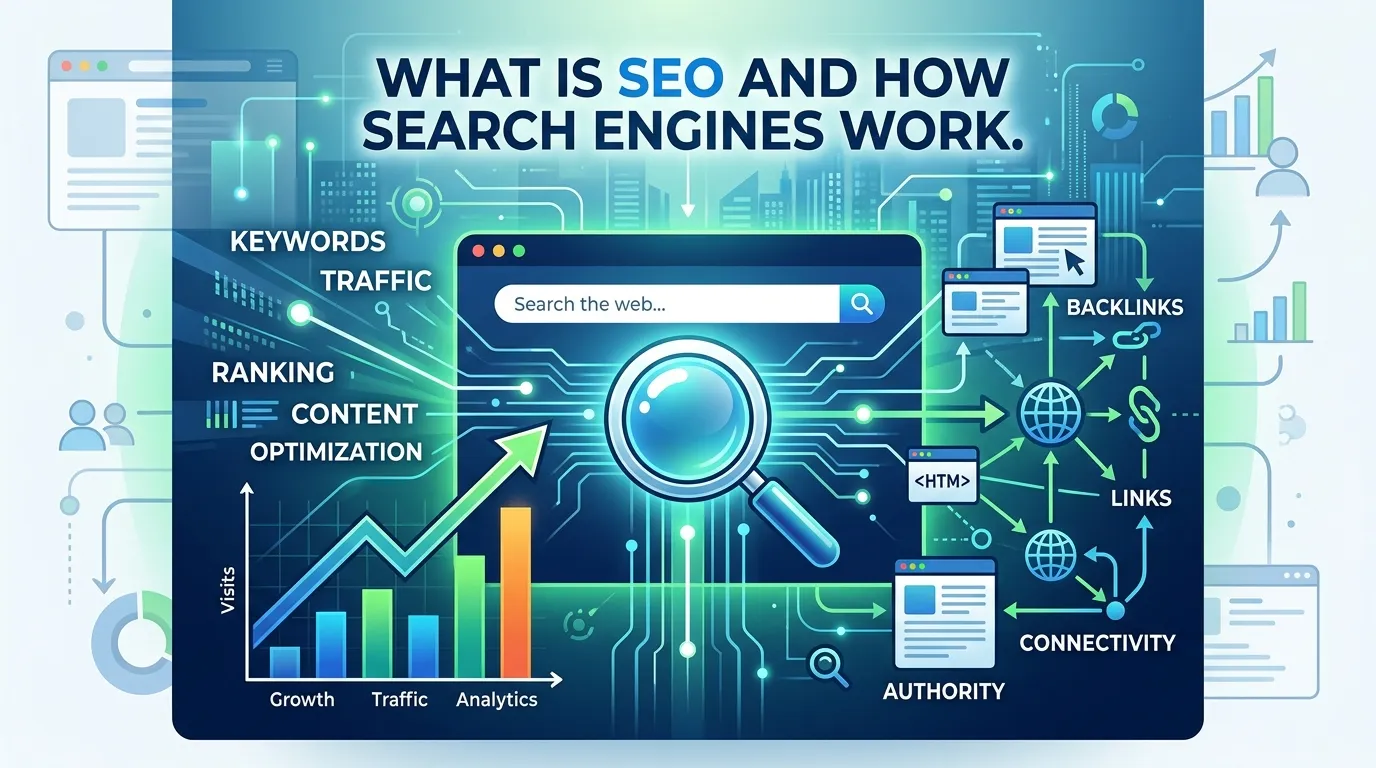
When you hire help, the seo services definition matters. SEO services usually include keyword research, on-page improvements, technical fixes, content creation, and link building. Some providers also handle reporting and ongoing strategy.
Think of it like home maintenance. You can patch a leak yourself, or you can hire a professional who handles the whole system. SEO services package that expertise so you don’t have to learn every detail alone.
Key takeaway: SEO is about earning visibility through relevance and trust, and SEO services bundle the work needed to get there.
Do I Need SEO for My Website?
A common question beginners ask is, “do i need seo for my website?” The short answer is usually yes, if you want people to find you through search.
Without SEO, your site relies on direct traffic, paid ads, or word of mouth. Those channels can work, but they often cost money or fade quickly. Search traffic, on the other hand, can grow steadily over time and keep delivering visitors long after you publish.
Here are signs you need SEO:
- You’re not showing up when people search for your products or services
- Your competitors rank above you for important terms
- You depend heavily on paid ads and want a cheaper long-term channel
- Your traffic has been flat or declining
Even a small local business benefits. When someone nearby searches for “coffee shop near me,” strong local SEO helps you appear first. SEO isn’t only for big brands; it levels the playing field.
Key takeaway: If your customers use search engines, you need SEO to be found.
Why Invest in SEO?
Let’s talk about the reasons why invest in seo makes sense for almost any business. SEO offers one of the best returns of any marketing channel because organic clicks are free once you rank.
Paid ads stop the moment your budget runs out. SEO keeps working. A well-optimized page can attract visitors for months or even years with minimal extra spend. That compounding effect is hard to beat.
Consider these benefits:
- Long-term traffic: rankings can hold steady and bring consistent visitors
- Higher trust: people often trust organic results more than ads
- Better user experience: good SEO improves site speed and usability
- Lower cost per click over time: no per-click fees like paid ads
There’s also a credibility factor. When your site appears at the top of natural results, users assume you’re a leader in your field. That perception alone can boost conversions.
Of course, SEO takes patience. Results build gradually, not overnight. But the payoff often outlasts every other channel you try.
Key takeaway: SEO is an investment in steady, trusted, cost-effective growth.
Natural Search vs Paid Search
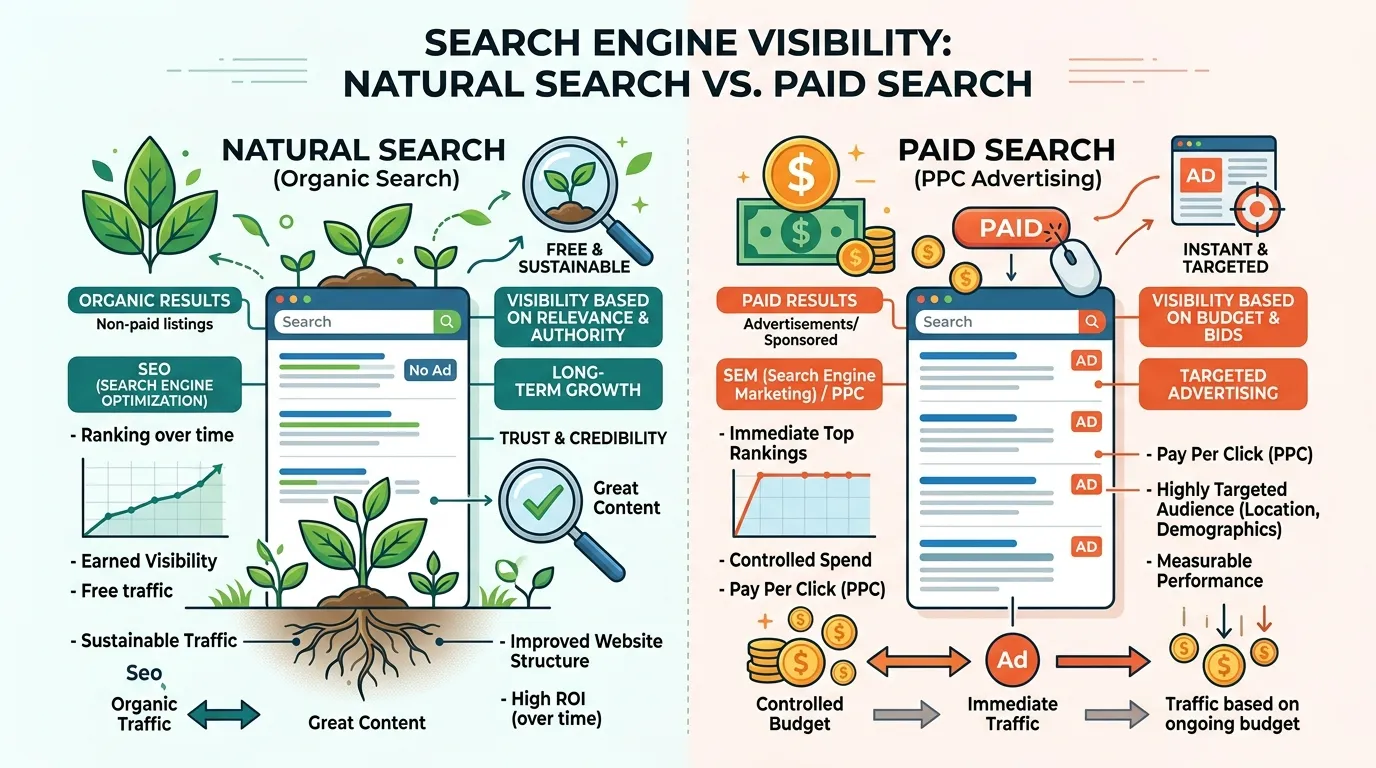
Understanding natural search vs paid search is one of the core seo concepts every beginner should grasp. Both appear on search results pages, but they work very differently.
Natural search (also called organic) refers to the unpaid listings ranked by the search engine’s algorithm. Paid search refers to ads you pay for, usually labeled “Sponsored” or “Ad.” Together they form the foundation of search engine marketing.
The table below compares the two so you can see the trade-offs at a glance.
|
Factor |
Natural Search (SEO) |
Paid Search (PPC) |
|---|---|---|
|
Cost |
Free per click, time-intensive |
Pay per click, ongoing budget |
|
Speed of results |
Slower, builds over months |
Instant once ads run |
|
Longevity |
Lasts after work stops |
Stops when budget ends |
|
User trust |
Generally higher |
Slightly lower |
|
Best for |
Long-term growth |
Quick wins, promotions |
|
Control |
Less direct control |
Precise targeting |
Neither option is “better” in every case. Many businesses use both. Paid search delivers fast visibility while your SEO builds momentum. Over time, natural search often becomes the more affordable engine for growth.
Key takeaway: Use paid search for speed and SEO for sustainable, lower-cost traffic.
Search Engine Marketing: The Bigger Picture
Search engine marketing (often shortened to SEM) is the umbrella term covering both organic SEO and paid advertising. It describes every effort to gain visibility on search engines.
Some people use SEM to mean only paid ads. Others use it to include SEO too. Either way, the goal is the same: connect with people at the exact moment they’re searching for what you offer.
A balanced search engine marketing plan often blends three things:
- SEO for long-term organic visibility
- Paid search for immediate placement
- Analytics to measure and refine performance
The strongest strategies treat these as partners, not competitors. Data from your paid campaigns can reveal which keywords convert, helping you focus your SEO efforts where they matter most.
Key takeaway: SEM combines organic and paid tactics to capture searchers at every stage.
SEO Strategy Development: Building a Plan That Works
Random tactics rarely produce lasting results. That’s why seo strategy development is one of the most important core seo concepts. A strategy gives your efforts direction and helps you measure progress.
A solid plan answers a few key questions: Who is your audience? What are they searching for? What does success look like? Once you know these answers, you can build a focused roadmap.
Step 1: Research Your Keywords
Start by finding the words and phrases your audience types into search engines. Look for terms with reasonable search volume and manageable competition. Group them by topic so you can plan content clusters.
Keyword research shapes everything that follows. It tells you what to write, how to structure pages, and which opportunities are worth chasing first.
Step 2: Audit Your Current Site
Before adding new content, check what you already have. Look for slow pages, broken links, thin content, and missing titles. Fixing these issues often produces quick gains.
An audit also reveals your strongest pages, the ones already earning traffic. You can improve those further to climb even higher.
Step 3: Create and Optimize Content
Now build content that answers your audience’s questions better than anyone else. Use clear headings, helpful examples, and natural keyword placement. Quality matters far more than quantity.
Each page should target a clear topic and intent. When you match what users want, search engines reward you with better rankings.
Step 4: Build Authority and Track Results
Earn links from reputable sites, share your content, and monitor your rankings over time. SEO strategy development is never “done.” You refine it as data comes in and as search behavior changes.
Key takeaway: A clear strategy turns scattered effort into measurable growth.
Website Optimization Techniques That Move the Needle
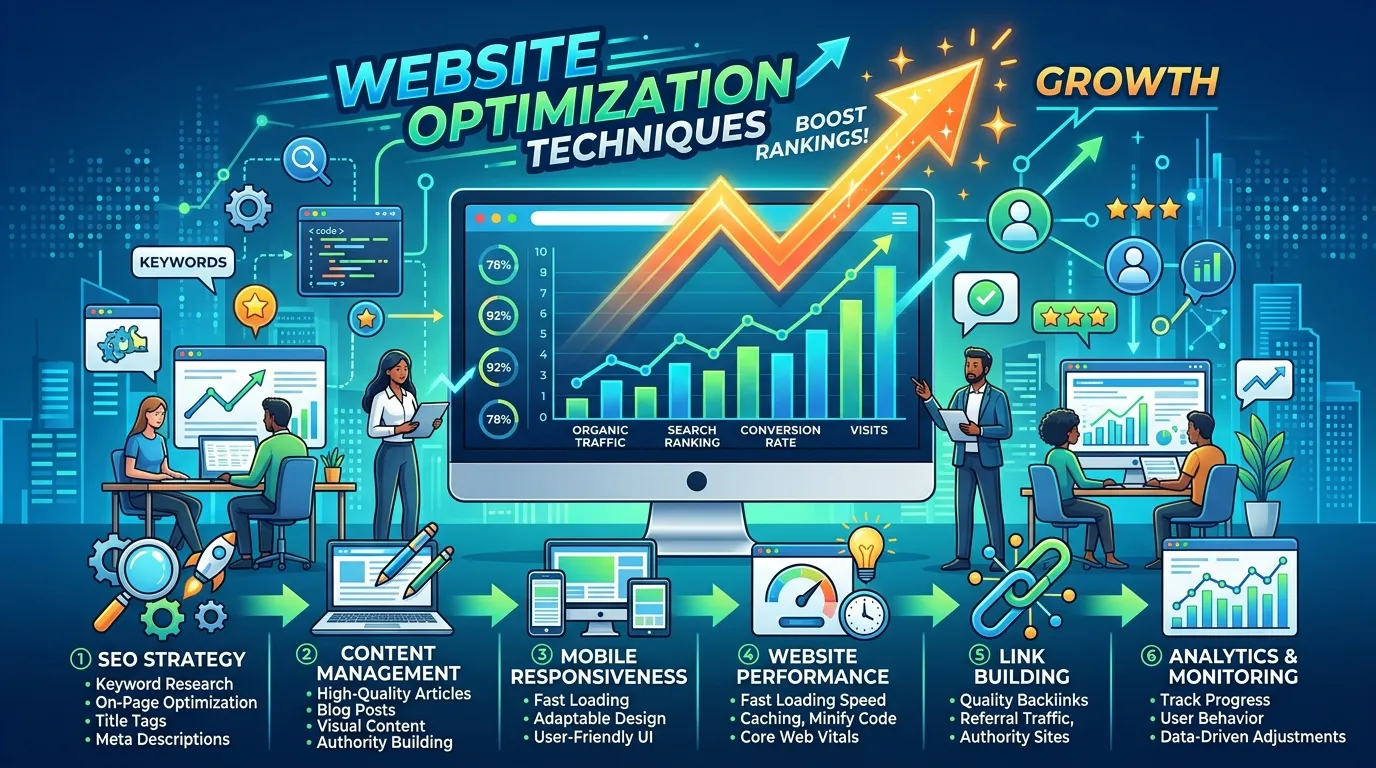
Once you have a strategy, you need practical website optimization techniques to bring it to life. These techniques fall into three broad buckets: on-page, technical, and off-page.
On-page optimization covers everything on your visible pages, like titles, headings, content, and internal links. Technical optimization deals with the behind-the-scenes elements such as site speed, mobile-friendliness, and crawlability. Off-page focuses on building trust through backlinks and brand mentions.
Here are reliable techniques worth applying:
- Write descriptive title tags that include your target keyword
- Improve page speed by compressing images and reducing scripts
- Make your site mobile-friendly so it works on every device
- Use internal links to guide users and spread ranking power
- Earn quality backlinks from relevant, trustworthy sources
- Structure content with clear headings for readability
If you want a deeper dive into the fundamentals, this resource is genuinely helpful.
Common Optimization Mistake to Avoid
A frequent error is stuffing keywords into every sentence. This used to work years ago, but modern search engines penalize it. Write for humans first, and place keywords where they read naturally.
Another mistake is ignoring mobile users. More than half of all searches happen on phones. If your site loads slowly or looks broken on mobile, you’ll lose rankings and visitors fast.
Key takeaway: Focus on speed, clarity, mobile experience, and natural keyword use.
What Is an SEO Company?
You may be wondering, “what is seo company work really like?” An SEO company is a business that helps clients improve their search visibility. They handle the strategy, technical work, and content needed to climb the rankings.
A good SEO company acts as a partner. They study your goals, analyze your competitors, and build a custom plan. Then they execute the work, report results, and adjust based on data.
SEO companies vary widely. Some specialize in local businesses, others in large enterprises or specific industries. When choosing one, look for transparency, clear reporting, and realistic promises. Be cautious of anyone guaranteeing the number-one spot overnight, that’s a red flag.
Key takeaway: An SEO company provides the expertise and labor to grow your organic visibility.
Responsibilities of SEO Professionals
The responsibilities of seo experts stretch far beyond stuffing keywords into pages. Modern SEO blends marketing, technical skill, and content strategy. Understanding these duties helps you know what to expect, whether you hire someone or do it yourself.
Here’s what SEO professionals typically handle:
- Keyword and market research to find opportunities
- On-page optimization of titles, content, and structure
- Technical SEO like site speed, indexing, and structured data
- Content planning that targets user intent
- Link building to grow site authority
- Analytics and reporting to track progress
- Staying current with algorithm updates and trends
Why These Responsibilities Matter
Each duty supports the others. Great content won’t rank if your site is slow. Perfect technical health won’t help if your content misses what users want. The responsibilities of seo work together as a system.
That’s also why SEO is a continuous job rather than a one-time fix. Search engines update constantly, and competitors keep improving. Staying visible means staying active.
Key takeaway: SEO professionals juggle research, content, technical work, and analysis to drive results.
How to Start an SEO Consulting Business
Maybe you’ve fallen in love with these concepts and want to turn them into a career. Learning how to start an seo consulting business is easier than you might think, though it takes dedication and real skill.
Start by mastering the fundamentals covered in this guide. You can’t sell what you don’t understand. Practice on your own site or a friend’s project to build proof of your abilities.
Step 1: Build Skills and a Portfolio
Take real projects, document your results, and create case studies. Even small wins, like ranking a local business higher, make powerful proof for future clients. Confidence comes from doing the work.
Step 2: Define Your Services and Pricing
Decide whether you’ll offer audits, full management, consulting calls, or content help. Clear packages make it easier for clients to say yes. Research what others charge so your pricing stays competitive.
Step 3: Find Your First Clients
Reach out to local businesses, network online, and ask for referrals. Many beginners land early clients through personal connections. Deliver great results, and word of mouth will follow.
Step 4: Keep Learning
SEO changes often, so ongoing education is part of the job. Follow industry blogs, test new ideas, and refine your process. The best consultants never stop learning.
Key takeaway: Start small, prove your skills, and grow your client base through results.
An SEO Crash Course Recap
Let’s pull everything together in a quick seo crash course style summary. Think of this as your cheat sheet for the core seo concepts we’ve covered.
- SEO improves your visibility in organic search results
- You likely need SEO if customers use search engines to find you
- Why invest? Long-term, trusted, cost-effective traffic
- Natural vs paid search offer different speeds and costs
- Search engine marketing combines both approaches
- Strategy development gives your work direction
- Optimization techniques cover on-page, technical, and off-page
- SEO companies and professionals handle the heavy lifting
- You can build a consulting business by mastering these basics
This crash course gives you the mental map. From here, depth comes through practice. Pick one area, apply it, measure the result, and move to the next.
Putting the Crash Course Into Action
Knowledge only helps when you use it. Choose a single page on your site this week and improve its title, add helpful content, and check its speed. Small steps build real momentum.
Track your rankings over the following weeks. Watching your effort pay off keeps you motivated to keep going.
Key takeaway: Master one concept at a time and apply it directly to see results.
Frequently Asked Questions
What are the core SEO concepts every beginner should know?
The core seo concepts include relevant content, technical site health, quality backlinks, and a strong user experience. Together, these signals help search engines understand and trust your pages. Master these basics first, then layer in advanced tactics. Almost every successful strategy builds on this foundation.
Do I need SEO for my website if I already run paid ads?
Yes, paid ads and SEO serve different goals, so combining them often works best. Ads bring instant traffic but stop the moment your budget runs dry. SEO builds lasting visibility that keeps delivering visitors over time. Using both gives you short-term speed and long-term stability.
Why invest in SEO when results take so long?
SEO takes patience, but the long-term payoff is hard to match. Once you rank, organic clicks cost nothing per visit, unlike ongoing ad spend. Strong rankings also build trust and credibility with your audience. The compounding traffic makes the wait worthwhile for most businesses.
What is an SEO company and what do they do?
An SEO company helps businesses improve their search visibility through strategy and execution. They handle keyword research, content, technical fixes, and link building. A good company offers clear reporting and realistic expectations. They act as a partner focused on growing your organic traffic steadily.
What does the SEO services definition actually include?
The seo services definition usually covers keyword research, on-page optimization, technical SEO, content creation, and link building. Many providers also include analytics and ongoing strategy. The exact mix depends on your goals and budget. Always confirm what’s included before signing any agreement.
What is the difference in natural search vs paid search?
Natural search refers to unpaid organic listings ranked by the algorithm. Paid search shows ads you pay for, marked as sponsored. Organic results build slowly but last, while paid results appear instantly yet stop when funding ends. Many businesses use both for balanced visibility.
How does search engine marketing fit into all of this?
Search engine marketing is the umbrella term covering both SEO and paid advertising. It includes every effort to gain visibility on search results pages. A strong plan blends organic and paid tactics with solid analytics. The goal is reaching searchers at the exact moment they need you.
How do I begin SEO strategy development from scratch?
Start seo strategy development with keyword research to understand your audience. Then audit your current site to find quick wins and weak spots. Create and optimize content that matches search intent, and build authority through links. Track your results and refine the plan as data comes in.
What are the main responsibilities of SEO professionals?
The responsibilities of seo experts include research, on-page optimization, and technical work. They also handle content planning, link building, and performance reporting. Staying current with algorithm updates is part of the job too. These duties work together as a connected system, not isolated tasks.
Can I really learn how to start an SEO consulting business alone?
Yes, many consultants begin solo by mastering the fundamentals first. Build skills through practice projects and document your results as case studies. Define clear service packages, set fair prices, and find early clients through networking. Keep learning, since SEO changes often and rewards those who adapt.
What website optimization techniques offer the fastest wins?
Quick wins often come from improving page speed and fixing broken links. Adding descriptive title tags and strong internal links also helps fast. Making your site mobile-friendly is essential since most searches happen on phones. These website optimization techniques deliver noticeable gains with reasonable effort.
Is an SEO crash course enough to start ranking?
An seo crash course gives you the mental map and core concepts to begin. It won’t make you an expert overnight, but it’s a solid starting point. Apply what you learn to one page, measure the results, and improve. Real skill grows through consistent practice over time.
Conclusion: Your Next Step With SEO
You now understand the core seo concepts that power search visibility, from natural search vs paid search to strategy development and optimization techniques. We covered why SEO matters, what SEO companies do, and how to start a consulting business of your own.
The big lesson is simple: SEO rewards patience, consistency, and genuine helpfulness. Focus on serving your audience, keep your site healthy, and build trust over time.
Your next step is action. Pick one page this week, improve its content and speed, and watch how it performs. Small, steady improvements add up to real growth, and you’re now equipped to make them happen.
