
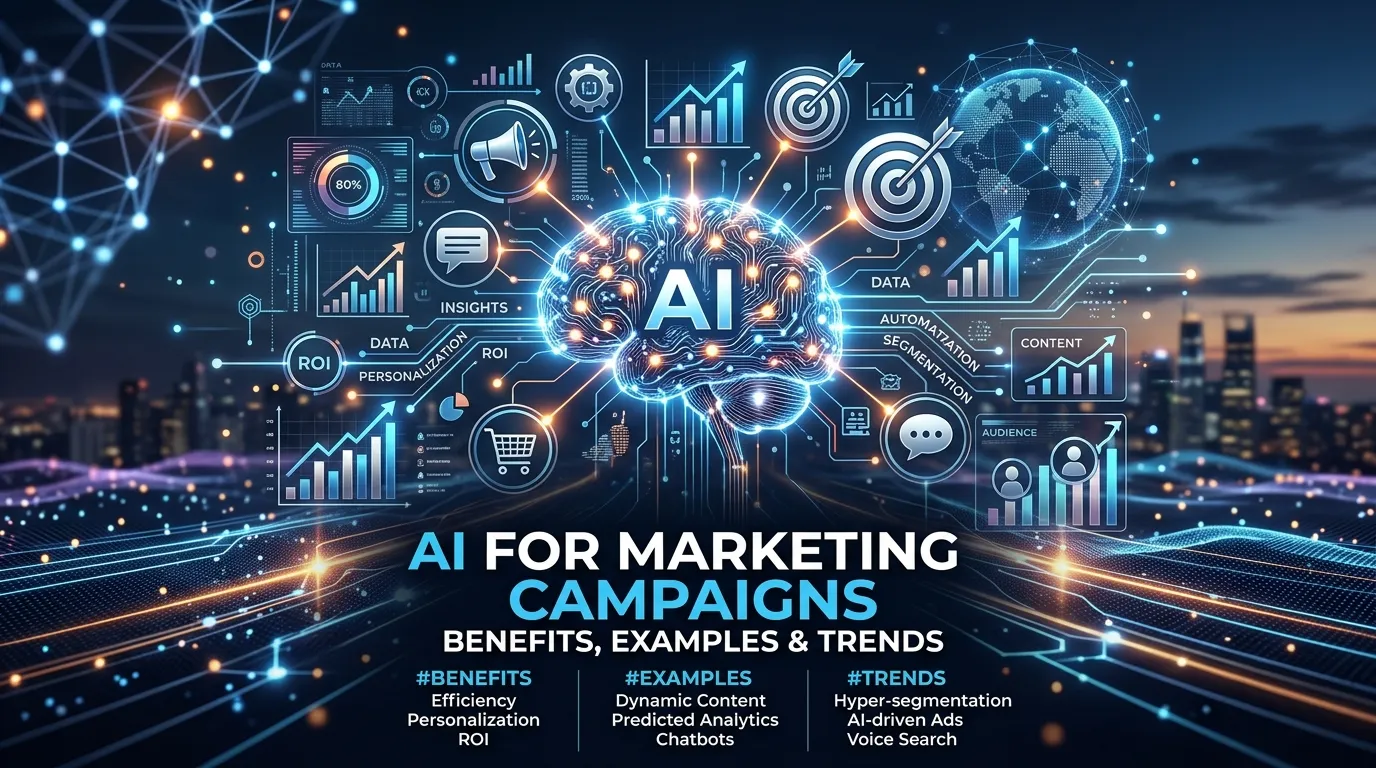
This guide explains how AI transforms marketing through automation, predictive analytics, personalization, chatbots, content creation, and intelligent targeting, helping businesses improve efficiency, customer engagement, campaign performance, and long-term growth while navigating privacy and implementation challenges.
Artificial intelligence has completely shifted how businesses connect with their customers. We have moved past the days of broad, untargeted advertising efforts that rely heavily on guesswork. Now, software algorithms process vast amounts of data in seconds, revealing hidden patterns and customer preferences that would take human analysts months to uncover.
Using AI for marketing campaigns allows teams to operate with unprecedented precision and efficiency. You can understand exactly what your audience wants before they even express it. You can deliver highly tailored messages at the exact moment a consumer is most likely to make a purchase. Integrating AI for marketing campaigns completely transforms your strategy.
This post will explore how you can integrate AI for marketing campaigns to drive better results. We will cover the core benefits, key technologies, emerging trends, practical implementation tips, real-world examples, and the challenges you need to navigate to stay ahead of the curve. By the end of this guide, you will know exactly how to leverage AI for marketing campaigns.
Why AI Is Revolutionizing Modern Marketing
No aspect of digital marketing remains untouched by the rise of artificial intelligence. Marketers used to spend countless hours sifting through analytics, constructing audience segments by hand, and manually crafting variations of ad copy. Today’s competitive landscape demands speed, personalization, and efficiency—areas where AI excels and marketers benefit the most.
By automating complex processes and surfacing intelligent recommendations, AI empowers even small marketing teams to compete with large enterprises. AI-powered tools can analyze millions of data points to predict which subject line will convert best for a specific segment or when the ideal time to send a campaign is likely to occur. This revolution in marketing technology makes campaigns more agile, iterative, and, most importantly, customer-centric.
Benefits of AI for Marketing Campaigns
Implementing AI for marketing campaigns brings several massive advantages to teams. It optimizes existing workflows and opens up entirely new avenues for customer engagement. When you utilize AI for marketing campaigns, you set a foundation for scalable growth.
Enhanced Personalization
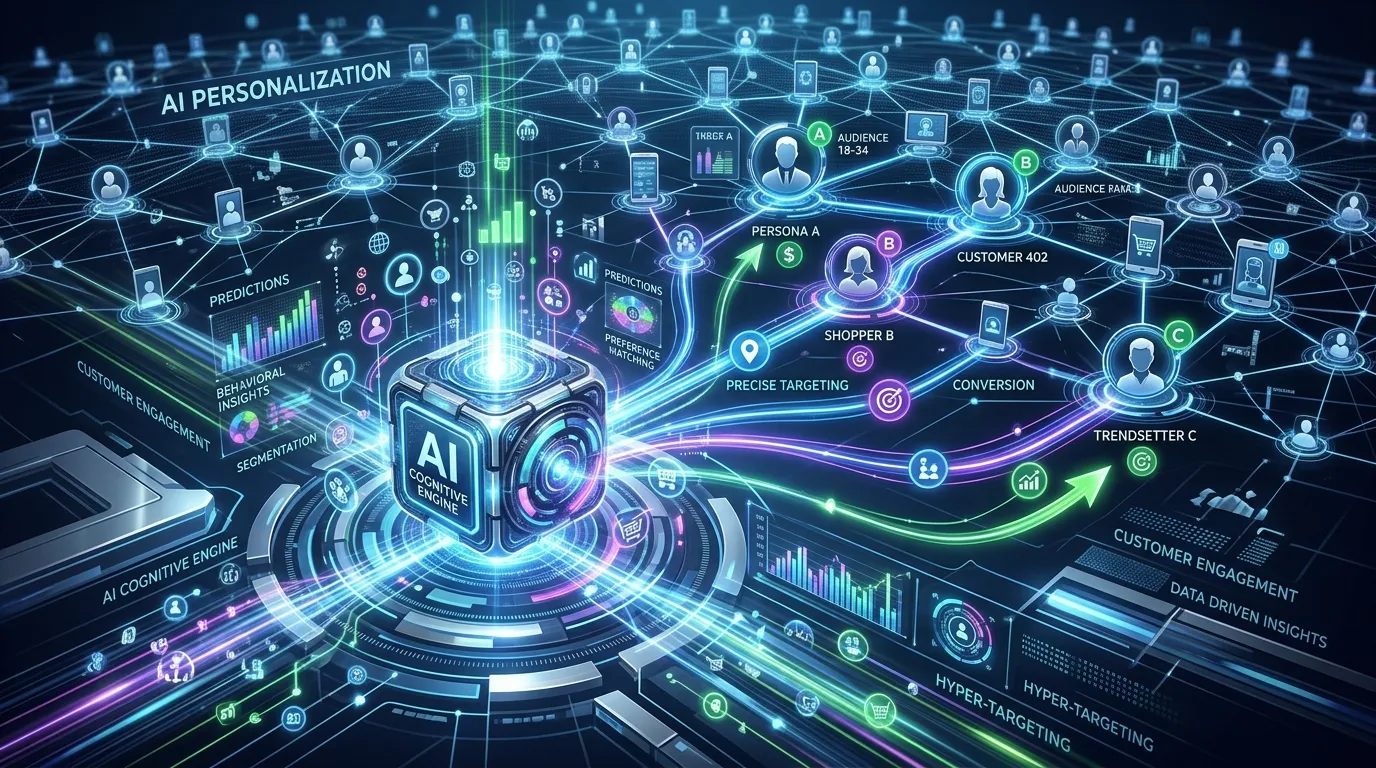
Consumers expect brands to understand their unique needs. Using AI for marketing campaigns analyzes browsing habits, past purchases, and demographic data to create highly personalized experiences for each user. Instead of sending the same promotional email to your entire list, AI for marketing campaigns helps you tailor the product recommendations, subject lines, and send times to match individual preferences. This level of personalization significantly increases conversion rates and builds stronger brand loyalty.
AI’s ability to detect micro-patterns in user behavior means that brands can adapt messaging moment-to-moment. For example, if a customer repeatedly browses running shoes but never completes a purchase, AI can trigger a custom offer or reminder at the precise time they’re most likely to engage. This individualized approach is driving higher retention and lifetime value across industries.
Improved Targeting and Segmentation
Relying on basic demographics like age or location is no longer sufficient. When you deploy AI for marketing campaigns, you take audience segmentation to the next level by identifying complex behavioral patterns. It groups your audience based on their likelihood to churn, their lifetime value, or their affinity for specific product categories. This ensures your budget for AI for marketing campaigns is spent engaging the people most likely to respond favorably to your messaging.
Marketers can also use lookalike modeling, where AI identifies characteristics of top-performing customers and automatically finds new prospects who share these traits. These tools drive acquisition costs down while improving ad relevance and click-through rates.
Predictive Analytics for Better Decision-Making
Predictive analytics uses historical data to forecast future outcomes. Teams use AI for marketing campaigns to anticipate market trends and customer behaviors. You can predict which products will see a spike in demand next quarter or determine the exact combination of channels that will yield the highest return on investment. This foresight allows you to make proactive, data-backed decisions when running AI for marketing campaigns.
Increasingly, predictive analytics is moving beyond basic forecasting and into prescriptive territory—telling marketers not just what might happen, but which specific action will yield the desired result. This evolution multiplies the potential ROI for any business willing to embrace an AI-driven mindset.
Automation of Repetitive Tasks
Marketing requires a lot of tedious, repetitive work. Scheduling social media posts, categorizing leads, and generating performance reports take up valuable time. Utilizing AI for marketing campaigns automates these manual processes, freeing up your team to focus on high-level strategy and creative brainstorming. By handling the busywork, AI for marketing campaigns dramatically increases overall team productivity.
Automation also accelerates campaign deployment. Instead of waiting weeks for data collection and analysis, AI can synthesize performance metrics in real time and dynamically adjust ad budgets or creative elements mid-campaign for improved results.
Key Technologies Powering AI for Marketing Campaigns
To truly leverage AI for marketing campaigns, you need to understand the underlying technologies powering these advanced tools. These systems make AI for marketing campaigns incredibly effective.
Machine Learning
Machine learning is a subset of AI where systems learn and improve from experience without being explicitly programmed. In the realm of AI for marketing campaigns, machine learning algorithms power recommendation engines, optimize ad bidding in real time, and continuously refine audience segments based on incoming data. The more data these algorithms process, the smarter and more accurate your AI for marketing campaigns becomes.
Deep Learning Models
Deep learning takes machine learning further by using neural networks to analyze complex data structures. This helps AI for marketing campaigns process unstructured data like audio and raw text, creating deeper customer insights. For marketers, deep learning enables sentiment analysis on customer feedback, detects brand mentions in video and audio, and even generates personalized spoken content for ads and support.
Natural Language Processing (NLP)
Natural language processing allows computers to understand, interpret, and generate human language. NLP is the driving force behind sentiment analysis, which helps brands gauge public opinion by analyzing social media comments and customer reviews. It also powers voice search optimization, ensuring your content ranks well when users ask their smart speakers a question. NLP makes AI for marketing campaigns feel inherently human.
NLP is also critical for chatbots and virtual assistants, as it enables brands to converse naturally with customers—answering questions, qualifying leads, and capturing preferences for future use.
Computer Vision
Computer vision enables machines to analyze and understand visual information from images and videos. Marketers use this technology to track brand logos in user-generated content across social media. It also allows for visual search capabilities, where customers can upload a photo of an item they like, and the system finds similar products in your inventory. This visual element pushes AI for marketing campaigns to new heights.
Computer vision can also power event recognition in video streams, allowing brands to insert contextually relevant product placements or real-time offers during live broadcasts.
Real-World Examples of AI for Marketing Campaigns
Many brands are already using AI for marketing campaigns to execute highly successful initiatives. Here is how these tools look in action when you implement AI for marketing campaigns effectively.
Chatbots and Virtual Assistants
Modern chatbots do much more than answer basic FAQs. Powered by NLP, they can hold complex conversations, guide users through the purchasing process, and offer personalized product recommendations based on the user’s responses. They provide 24/7 customer support, capturing leads and driving sales even when your team is offline. This represents a perfect use case of AI for marketing campaigns.
Some chatbots feature seamless integration with e-commerce systems, letting users track orders, initiate returns, or access exclusive offers—all through natural language conversations. Virtual assistants powered by AI help brands reduce support costs and boost overall customer satisfaction.
AI-Powered Content Creation
Generative AI tools can produce initial drafts for blog posts, social media captions, and ad copy in seconds. While human editors are still necessary to refine the brand voice and ensure factual accuracy, these tools significantly accelerate the content creation pipeline. Marketers also use AI for marketing campaigns to generate multiple variations of ad copy for A/B testing.
AI can even analyze trending keywords and topics automatically, suggesting content ideas and titles that are most likely to attract traffic and engagement.
Dynamic Pricing
E-commerce platforms use AI for marketing campaigns to adjust prices in real-time based on supply, demand, competitor pricing, and even the individual user’s browsing history. Ride-sharing apps and airlines have used dynamic pricing for years, but AI for marketing campaigns makes it accessible for retailers to maximize profit margins while remaining competitive.
Sophisticated AI models factor in factors like inventory levels, seasonality, and consumer sentiment, managing pricing strategy with near-perfect accuracy and improving both sales volume and margin.
Programmatic Advertising
Programmatic advertising automates the buying and selling of ad space. Algorithms analyze a user’s profile as a webpage loads, bidding on ad space and serving a highly relevant advertisement in milliseconds. This ensures your ads are shown to the right people, at the right time, on the right platforms, minimizing wasted ad spend. Programmatic ads rely heavily on AI for marketing campaigns.
AI has made it possible to automatically allocate ad budgets to the best-performing channels, pause underperforming ads, and experiment with new segments—all without manual intervention.
Comparing Traditional and AI-Driven Strategies
Understanding the shift from manual processes to automated ones helps clarify the value of these tools. To help bridge the gap, you can read this marketing automation information to streamline your team’s workflow.
|
Feature |
Traditional Marketing |
AI for Marketing Campaigns |
|---|---|---|
|
Data Analysis |
Manual, slow, and prone to human error |
Instantaneous, highly accurate, processes massive datasets |
|
Personalization |
Broad segments based on simple demographics |
Hyper-personalized to the individual user level |
|
Ad Bidding |
Manual adjustments based on past performance |
Real-time adjustments based on predictive analytics |
|
Content Creation |
100% human-generated, time-consuming |
AI-assisted drafting, rapid scaling of variations |
|
Customer Support |
Limited to business hours, requires large teams |
24/7 availability via intelligent chatbots |
Additional Strategies to Maximize AI for Marketing Campaigns
AI’s impact is only growing—here are extra ways to ensure you squeeze the most value out of your tech stack:
- Continual Learning: AI systems improve the more they are used and the more data they handle. Regularly feed your tools updated customer data, refreshed product catalogs, and recent marketing performance to keep recommendations sharp.
- Multichannel Integration: Use AI to synchronize your customer messaging across email, SMS, social media, and digital ads. Central platforms can monitor user response and retarget across these channels for higher engagement.
- Test and Optimize Creatives: Automate A/B and multivariate testing using AI so audiences always see the best-performing versions of graphics and copy in real time.
- Sentiment Monitoring: Leverage AI-driven sentiment analysis to adjust your tone and messaging according to how customers are feeling—especially during sensitive brand moments.
- Lifecycle Marketing: Deploy AI to map and address the unique needs of customers at each stage—from new lead to loyal repeat buyer—scaling personalized messages throughout the relationship.
Challenges of Using AI for Marketing Campaigns
While the benefits are clear, integrating AI for marketing campaigns comes with hurdles that must be addressed carefully. Planning for these obstacles ensures your AI for marketing campaigns succeeds.
Data Privacy and Ethics
Effective AI for marketing campaigns relies heavily on consumer data. With tightening regulations like GDPR and CCPA, marketers must ensure they are collecting, storing, and using data ethically and legally. Transparency is critical. Consumers need to know how their data is being used, and businesses must protect that data from breaches while running AI for marketing campaigns.
Marketers should invest in clear privacy statements, easy opt-out mechanisms, and robust data encryption to build and maintain consumer trust.
Implementation Costs
Adopting enterprise-level software for AI for marketing campaigns often requires a significant upfront investment. Beyond the software licensing fees, companies must factor in the costs of training employees, migrating data, and potentially hiring specialized talent to manage the new systems. However, the long-term ROI of AI for marketing campaigns usually offsets these costs.
For smaller businesses, cloud-based SaaS (Software as a Service) AI marketing tools help keep initial investment low while still reaping most of the advanced features.
The Need for Human Oversight
Algorithms used in AI for marketing campaigns are incredibly powerful, but they lack human empathy, cultural awareness, and nuanced judgment. They can sometimes produce biased results or generate tone-deaf content if left completely unchecked. Human oversight is absolutely necessary to guide the tools, interpret findings, and ensure all outputs align with your brand values.
Best practice: Regularly audit automated campaigns and outputs—not just for accuracy, but for inclusivity and values alignment.
Looking Ahead: The Future of AI in Marketing
As artificial intelligence continues to evolve, its role in marketing will only deepen. Expect to see:
- Conversational Commerce: Where AI-driven chatbots not only answer questions, but complete sales, provide upsell recommendations, and handle post-purchase support, blurring the line between marketing, sales, and support.
- Visual and Voice Search: AI will allow consumers to shop using images or spoken queries, with marketing content optimized for these modalities.
- Hyper-personalized Customer Journeys: Websites, apps, and emails that adapt in real time not just based on static user attributes, but dynamic context and micro-moments, creating unique pathways for every single visitor.
- AI-Based Creative Generation: As AI gets more creative, campaigns will include AI-generated videos, personalized animations, and even music tailored to individual shopper profiles.
- Privacy-Preserving AI: New techniques in federated learning and anonymized data modeling will help marketers extract insights without ever touching identifiable user data, balancing analytics power and user trust.
Transform Your Strategy Today
Integrating AI for marketing campaigns into your workflows is an immediate competitive necessity. By embracing these tools, you can understand your audience better, create more impactful content, and optimize your budget with pinpoint accuracy.
Start small. Identify one repetitive task or one initiative that could benefit from better segmentation, and test an automated solution. As you see the results, you can gradually expand your use of AI for marketing campaigns across your entire ecosystem. Evaluate your current tech stack this week and look for opportunities where AI for marketing campaigns can drive your next wave of growth.
Frequently Asked Questions
What exactly is AI for marketing campaigns?
Using AI for marketing campaigns involves applying machine learning and automated software to process customer data and optimize promotional efforts. These tools help teams target audiences more accurately and create personalized experiences at scale. It removes the guesswork from traditional advertising methods.
How does AI improve audience targeting?
AI improves targeting by analyzing massive datasets to find hidden behavioral patterns among your customers. It groups people based on their likelihood to purchase rather than just their basic age or location. This ensures your messages reach the most receptive individuals possible.
Will AI replace human marketing teams?
AI will not replace human marketers, but it will significantly change how they work by automating repetitive tasks. Human creativity, empathy, and strategic oversight remain essential for building genuine brand connections. AI simply acts as a powerful assistant that makes teams more efficient.
How do chatbots contribute to marketing?
Chatbots engage website visitors instantly, answering questions and guiding them toward making a purchase. They capture lead information automatically, ensuring you never miss an opportunity even outside of standard business hours. They provide a seamless customer service experience that boosts conversion rates.
What is predictive analytics in marketing?
Predictive analytics uses your historical campaign data to accurately forecast future consumer trends and behaviors. It tells you which products will likely sell best next month and which channels will deliver the highest ROI. This lets you make proactive decisions instead of reacting to the market.
Can small businesses afford AI marketing tools?
Yes, many software platforms now offer affordable, scalable AI features designed specifically for small businesses. You do not need an enterprise budget to start using basic machine learning tools for email automation or ad bidding. The technology is becoming more accessible every single year.
How does AI help with content creation?
AI helps with content creation by rapidly generating outlines, drafting blog posts, and brainstorming social media captions. It allows you to test multiple variations of ad copy quickly to see what resonates best. Human editors simply review and polish the outputs to ensure brand voice consistency.
Does AI help with SEO and search marketing?
AI absolutely helps with search marketing by analyzing search intent and optimizing your content structure for better rankings. If you want to balance your approach, check out this search strategy guide for actionable insights. It makes keyword research and competitive analysis much faster.
What are the privacy concerns with AI marketing?
Because AI relies on massive amounts of consumer data, businesses must be incredibly careful about how they collect and store this information. You must comply with privacy laws like GDPR and ensure your customers know exactly how their data is used. Transparency builds trust and prevents legal issues.
How should a beginner start using AI in marketing?
A beginner should start by identifying one time-consuming task, such as email segmentation or social media scheduling, and apply an AI tool to automate it. Measure the results carefully before investing in more complex predictive analytics platforms. Starting small ensures you learn the technology without feeling overwhelmed.
