


This guide explains the differences between natural search and paid search, covering SEO, PPC advertising, advantages, disadvantages, strategies, and performance metrics to help businesses build a balanced digital marketing approach for long-term growth and immediate online visibility.
Search Engine Marketing serves as the cornerstone of modern digital strategy. When a potential customer opens a browser to find a solution to a problem, you want your brand to appear first. Securing that prime real estate at the top of the search engine results pages requires a clear understanding of the tools at your disposal.
The two primary methods for capturing this valuable traffic are natural search, commonly known as Search Engine Optimization (SEO), and paid search, often referred to as Pay-Per-Click (PPC) advertising. Natural search involves optimizing your website to rank based on merit and relevance. Paid search allows you to buy your way to the top by bidding on specific keywords.
Understanding the dynamic of natural search vs paid search is key to a comprehensive digital strategy. Knowing when to rely on organic growth and when to inject paid momentum makes the difference between a stagnant website and a thriving online business. This comprehensive guide explores every facet of natural search vs paid search to help you make informed marketing decisions.
Deep Dive into Natural Search
Natural search is the process of improving your website’s visibility in organic search results. Search engines use complex algorithms to determine which pages offer the most relevant and high-quality information for any given query. Mastering natural search vs paid search begins with understanding how search engines evaluate your content.
How Natural Search Works
Before a page can rank, search engines must discover it. This process happens through crawling, where search engine bots scour the web for new and updated content. Once crawled, the page is indexed and added to the search engine’s massive database. Finally, when a user enters a query, the search engine ranks the indexed pages based on hundreds of ranking factors to deliver the best possible results. Driving consistent organic traffic requires your site to excel at all three stages.
Key Components of SEO Marketing
Success in natural search requires a multi-faceted approach. You need to focus on three main pillars to build a strong foundation for your SEO marketing strategy.
On-page SEO
This involves optimizing individual web pages to rank higher and earn more relevant organic traffic. Key elements include conducting thorough keyword research, creating high-quality content, writing compelling meta descriptions, formatting content with proper headings, and building a logical internal linking structure.
Off-page SEO
This refers to actions taken outside of your own website to impact your rankings. The most important factor here is building high-quality backlinks from reputable sites. Domain authority and social signals also play a major role in signaling trustworthiness to search engines.
Technical SEO
If a site is broken, search engines will not rank it. Technical SEO ensures your site meets the strict requirements of modern search engines. This includes optimizing site speed, ensuring mobile-friendliness, submitting XML sitemaps, and implementing schema markup to help bots easily understand your content structure.
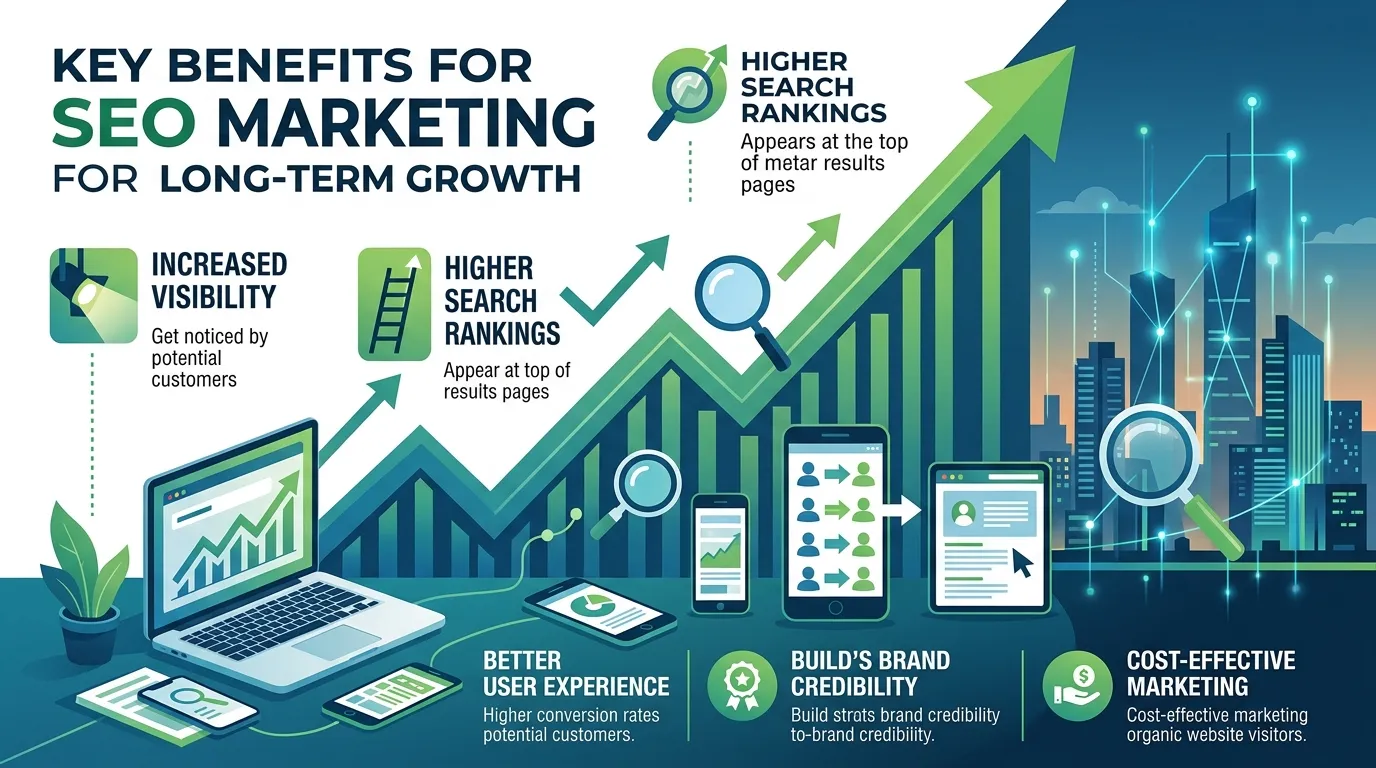
Advantages of SEO Marketing
Investing in natural search offers massive benefits for businesses willing to put in the necessary work over time.
- Sustainable visibility: It provides long-term organic traffic. Once you achieve a high ranking, you continue to reap the rewards without paying for every single click.
- Cost-effectiveness: While it requires an upfront investment of time and resources, the ongoing cost per visitor drops significantly over time.
- High credibility: Ranking organically builds credibility and trust. Many users inherently trust organic results more than sponsored links.
Disadvantages of SEO Marketing
Natural search is not without its specific challenges. The most significant drawback is the timeline. SEO yields slower results and requires immense patience. It can take months or even years to see a significant return on investment. Furthermore, search engine algorithms change constantly. A strategy that works effectively now might become obsolete shortly, requiring continuous adaptation.
Deep Dive into Paid Search
Paid search is a digital marketing model where advertisers pay a fee each time one of their ads is clicked. It is essentially a way of buying visits to your site, rather than attempting to earn those visits organically. When comparing natural search vs paid search, the financial mechanism is the most obvious differentiator.
How Paid Search Ads Work
Paid search platforms operate on an auction-based bidding system. Advertisers select keywords relevant to their business and bid on how much they are willing to pay for a click. When a user searches for that exact keyword, an ad auction takes place instantly. The search engine determines which paid search ads to display and in what order based on the bid amount and the ad’s Quality Score.
Learn more about the mechanics of pay-per-click advertising here:
Understanding PPC basics
Key Components of PPC Campaigns
Running successful PPC campaigns requires careful planning, strategic budget allocation, and continuous management.
Keyword Research and Intent
Unlike SEO, PPC keyword research focuses heavily on intent-based targeting. You want to bid on terms that indicate a high likelihood of a direct conversion or sale.
Ad Copy and Landing Pages
You have very limited space to capture a user’s attention. Writing compelling headlines, engaging descriptions, and strong calls-to-action is critical. Furthermore, the landing page must be highly relevant to the ad copy and offer a seamless user experience to ensure high conversion rates.
Bidding Strategies
Advertisers can choose from manual bidding, where they set maximum keyword bids themselves, or various automated and smart bidding strategies. These automated systems use machine learning to optimize for conversions or return on ad spend automatically.
Advantages of Paid Search Ads
The primary appeal of paid search is sheer speed. PPC provides instant visibility and faster results. Your paid search ads can appear at the top of the search results on the exact same day you launch your campaign.
- Instant traction: Generate traffic immediately upon launching the campaign.
- Precise targeting: Restrict your ads based on demographics, specific locations, the time of day, and precise user intent.
- Measurable ROI: You know exactly how much you spent and how much revenue it generated.
Disadvantages of Paid Search Ads
The main downside to paid search is the continuous cost. It gets expensive rapidly, especially in highly competitive niches where cost-per-click rates are exorbitant. PPC campaigns also require continuous monitoring and optimization. If you set up a campaign and ignore it, you will likely burn through your budget rapidly without seeing a profitable return.
Natural Search vs Paid Search: A Detailed Comparison
To fully grasp the natural search vs paid search dynamic, it helps to view their differences side by side. Both channels aim to drive visitors to your site, but they do so using completely different mechanics.
|
Feature |
Natural Search (SEO) |
Paid Search (PPC) |
|---|---|---|
|
Cost Structure |
Free clicks, but requires investment in content and technical site optimization. |
Pay per click. You pay every time a user clicks your advertisement. |
|
Timeline for Results |
Slow. It often takes months to see significant movement in organic traffic. |
Instant. Paid search ads appear immediately after campaign approval. |
|
Placement on SERP |
Appears in the main body of the search results page. |
Appears at the very top and bottom of the search results page. |
|
Sustainability |
Long-term. Traffic continues even if you temporarily stop optimization efforts. |
Short-term. Traffic stops the exact moment you turn off your funding. |
|
Targeting Capabilities |
Broad. Content answers wide-ranging questions and informational queries. |
Highly specific. Target exact demographics, locations, and timeframes. |
Strategic Considerations: When to Use Which
Deciding whether to allocate resources to natural search vs paid search depends entirely on your current business goals, budget, and timeline.
Scenarios for SEO Marketing
SEO marketing is paramount when you focus on building long-term authority and a sustainable inbound marketing engine. If you want to develop a comprehensive content strategy, SEO is the vehicle that drives steady, compounding traffic to your blog posts and resource guides over time. It is the best choice for businesses that want to dominate their niche organically and have the patience to see the strategy through.
Scenarios for PPC Campaigns
PPC campaigns are ideal when you need immediate traction. If you launch a new product, run a time-sensitive promotion, or try to break into a market with highly competitive keywords, paid search gives you the instant visibility you need. It also serves as an excellent tool for testing messaging and keyword viability before you invest heavily in an organic SEO campaign.
The Synergy: Combining Natural and Paid Search
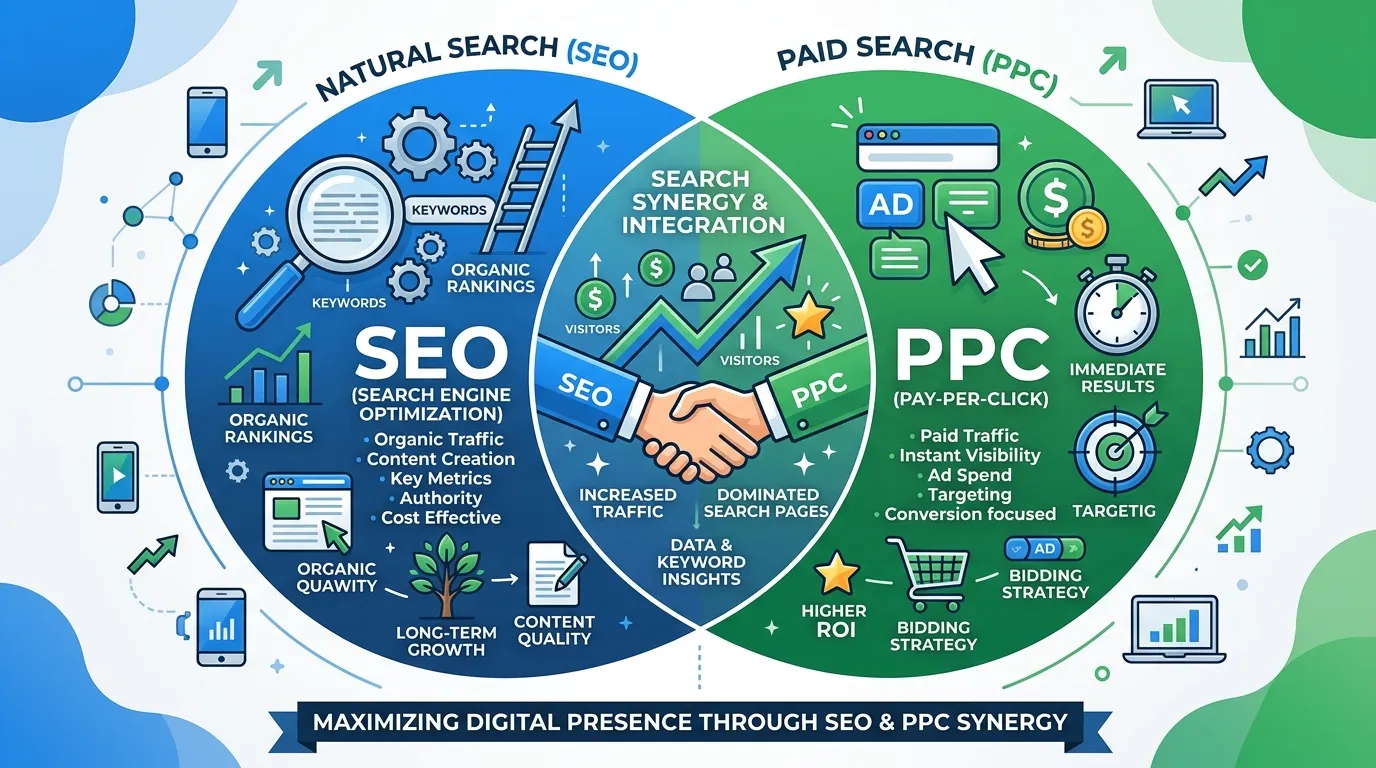
Treating natural search vs paid search as an either-or scenario limits your overall growth potential. When integrated properly, these two channels create a powerful synergy that maximizes your search engine presence.
Data Sharing and Keyword Insights
Data sharing is one of the biggest benefits of integrating your search efforts. You can use PPC data, such as which keywords generate the most conversions, to inform your long-term SEO content strategy. If a keyword proves highly profitable in your paid search ads, it is absolutely worth the effort to rank for it organically to capture the free traffic as well.
Remarketing to Organic Traffic
You can also use paid search to remarket to your organic traffic. If a user finds your site via a natural search result but leaves without purchasing, you can serve them targeted ads later. This brings them back into the sales funnel, combining the initial low cost of organic discovery with the high conversion rate of targeted remarketing.
Dominating the SERPs
Simultaneously dominating both paid and organic results for a single search query dramatically increases your overall brand visibility. Seeing your brand twice on the same page reinforces your authority and significantly increases the likelihood of a click. Furthermore, using PPC campaigns to bid on your own brand terms acts as a defensive strategy, preventing competitors from stealing your branded traffic while your SEO builds broader industry authority.
Measuring Success: Important KPIs
To ensure your strategies are effective, you must track the right Key Performance Indicators (KPIs) for each respective channel. Comparing natural search vs paid search requires looking at different sets of data.
SEO Metrics to Track
When evaluating natural search, focus on metrics that indicate sustainable growth and deep engagement.
- Monitor your overall organic traffic volume and keyword rankings.
- Keep an eye on your domain authority.
- Track engagement metrics like bounce rate and time on page.
- Measure the ultimate conversion rate of your organic visitors.
PPC Metrics to Track
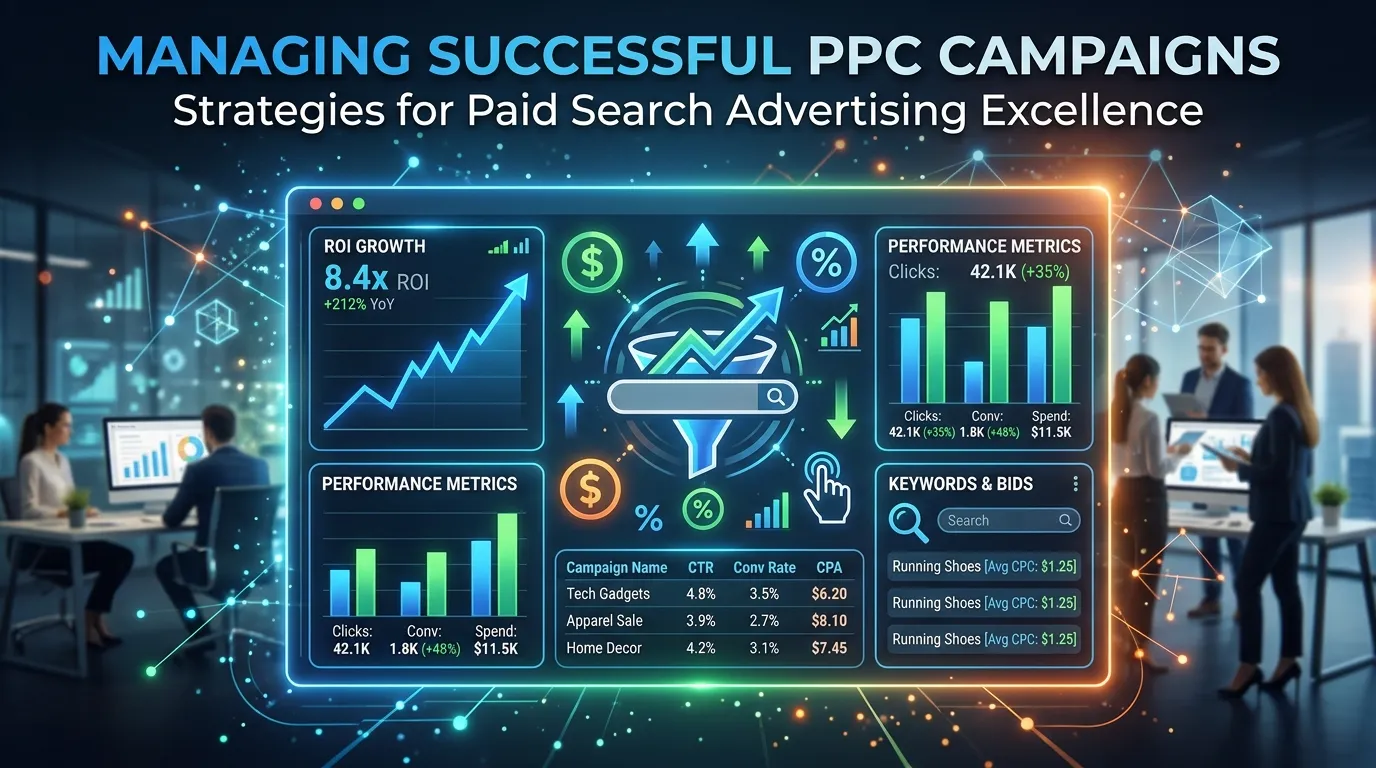
Paid search evaluation focuses heavily on immediate financial efficiency and precise targeting.
- Track impressions to see how often your ads display.
- Monitor clicks and the Click-Through Rate (CTR).
- Analyze your Cost Per Click (CPC) and Cost Per Acquisition (CPA).
- Calculate the total Return on Ad Spend (ROAS) to ensure profitability.
Future Trends in Search Engine Marketing
The search landscape remains in a constant state of evolution. Staying ahead of the curve requires an awareness of emerging technologies and shifting user behaviors that affect both natural search vs paid search.
AI and Machine Learning
Artificial intelligence and machine learning fundamentally alter search algorithms and advertising platforms. Search engines now integrate generative AI directly into search results. Users often find answers without ever clicking a traditional link. This shift forces marketers to rethink how they structure content and capture value from their organic traffic.
Voice and Visual Search
Voice search optimization becomes increasingly vital as smart speakers and digital assistants proliferate. Voice queries tend to be longer and more conversational, requiring a shift toward long-tail keyword targeting. Similarly, visual search allows users to search the web using images instead of text, making image optimization more important than ever.
Conclusion
The debate concerning natural search vs paid search represents a false dichotomy. Neither channel is inherently superior; they simply serve entirely different functions within a broader marketing ecosystem. A balanced, integrated approach that leverages the immediate impact of paid search ads and the sustainable growth of SEO marketing yields the best possible results. By monitoring your data and embracing new trends, you can build a resilient online presence that drives consistent growth for years to come.
Frequently Asked Questions
What is the main difference between natural search vs paid search?
Natural search involves optimizing your website to earn free, organic rankings on search engines over time based on relevance and authority. Paid search requires advertisers to pay a fee each time a user clicks their sponsored ad, providing immediate visibility at the top of the results page.
How long does it take to see results from SEO marketing?
SEO marketing typically requires significant patience, often taking three to six months to show noticeable improvements in organic traffic. It involves a compounding effect, where consistent content creation and technical optimization gradually build search engine trust and higher sustained rankings.
Why should a business invest in PPC campaigns?
PPC campaigns offer immediate visibility and highly targeted traffic, making them ideal for launching new products or running short-term promotions. Advertisers maintain strict control over their budget, ad messaging, and target audience, ensuring a measurable and predictable return on ad spend.
Can natural search vs paid search work together?
Yes, integrating both strategies maximizes your total search engine real estate and overall brand authority. You can use insights from your paid search ads to identify high-converting keywords, then focus your SEO marketing efforts on ranking organically for those exact same profitable terms.
Is organic traffic completely free?
While you do not pay the search engine directly for organic clicks, earning organic traffic requires a substantial investment of resources. You must spend time and money creating high-quality content, performing technical site updates, and building reputable backlinks to secure those top positions.
Why do some users prefer clicking on natural search results?
Many internet users trust organic results more because they know search engines rank these pages based on objective merit and relevance. They often view paid search ads as purely promotional, leading to higher average click-through rates for well-ranked natural search listings.
What happens to my traffic if I stop my paid search ads?
The moment you pause or deplete the budget for your PPC campaigns, your sponsored ads will immediately disappear from the search results. Consequently, any traffic generated specifically by those paid advertisements will stop instantly, highlighting the short-term nature of PPC marketing.
How do I know if my site needs technical SEO improvements?
If your web pages load slowly, display poorly on mobile devices, or fail to appear in search indexes entirely, you likely have technical SEO issues.
Explore exactly what SEO services entail
Professional audits can identify broken links, crawl errors, and architecture problems holding you back.
What is a Quality Score in paid search?
Quality Score is a metric used by search engines to evaluate the relevance and quality of your paid search ads and corresponding landing pages. A higher Quality Score lowers your cost per click and improves your ad placement, rewarding advertisers who provide excellent user experiences.
Should small businesses focus on natural search vs paid search first?
Small businesses generally benefit from starting with a strong foundation in SEO marketing to build long-term, sustainable organic traffic. However, allocating a small budget to targeted PPC campaigns helps generate immediate leads and cash flow while the slower organic strategy gains necessary momentum.
