
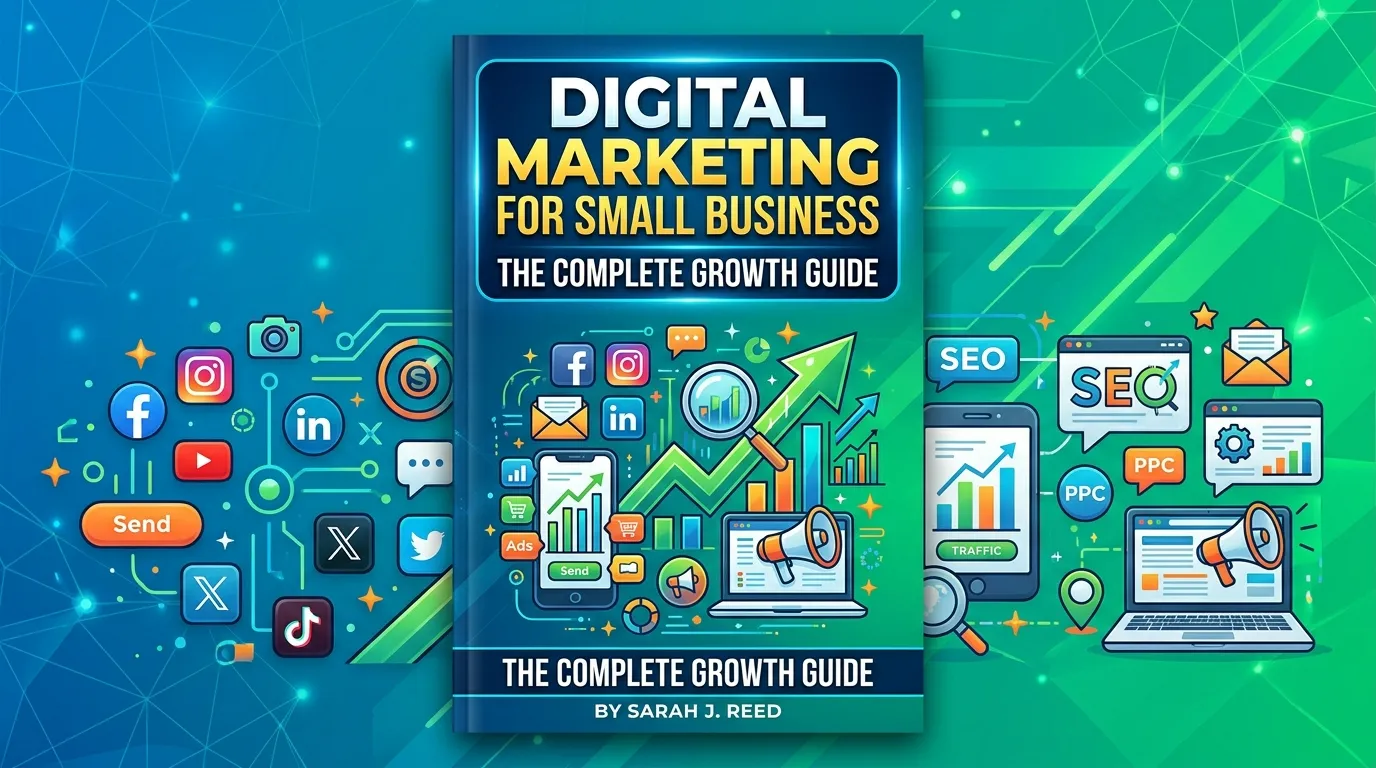
Digital marketing for small businesses helps owners attract customers affordably using SEO, social media, ads, email, and content. It builds visibility, drives sales, and provides measurable growth through consistent, data-driven online marketing strategies.
Running a small business means wearing a dozen hats before lunch. You handle sales, customer service, product decisions, and somehow you’re also expected to become a marketing expert. The good news? Digital marketing for small business owners has never been more accessible, affordable, or powerful than it is right now.
This guide walks you through everything you need to build a marketing engine that brings in customers consistently. You’ll learn how to choose the right channels, stretch a tight budget, and measure what actually works. By the end, you’ll have a clear roadmap covering strategy, social media, search engines, paid ads, email, and the metrics that matter most.
Let’s turn your marketing from a guessing game into a growth machine.
Why Digital Marketing for Small Business Matters More Than Ever
Your customers are online. They search for products on their phones, read reviews before buying, and follow brands they trust on social platforms. If your business isn’t visible where people spend their attention, you’re handing customers to competitors who show up first.
Traditional advertising like billboards and newspaper ads costs a fortune and offers little way to track results. Digital marketing for small business flips that script. You can start with a modest budget, reach exactly the people who want what you sell, and see precisely which efforts drive sales.
The Level Playing Field
One of the biggest advantages of digital channels is fairness. A local bakery can outrank a national chain in local search results. A one-person consultancy can build an audience of thousands on social media. Size no longer decides who wins attention. Smart strategy does.
Small business marketing rewards creativity and consistency over deep pockets. When you understand your audience and speak directly to their needs, you compete on message quality, not media spend.
The Cost Advantage
Consider the numbers. A single local newspaper ad might cost several hundred dollars for one appearance. The same budget on targeted social media ads could reach thousands of qualified prospects for weeks. Email marketing often returns more than $30 for every dollar spent.
These economics matter enormously when every dollar counts. Digital marketing for small business owners lets you test, learn, and scale without betting the company on unproven campaigns.
Measurable Results You Can Trust
With digital channels, you know exactly what happens after you hit publish. You see how many people clicked, how long they stayed, and whether they bought. This data removes the guesswork that plagued traditional advertising for decades.
You can pause what fails and double down on what works. That feedback loop is the secret weapon behind sustainable small business marketing.
Building Your Digital Marketing Foundation
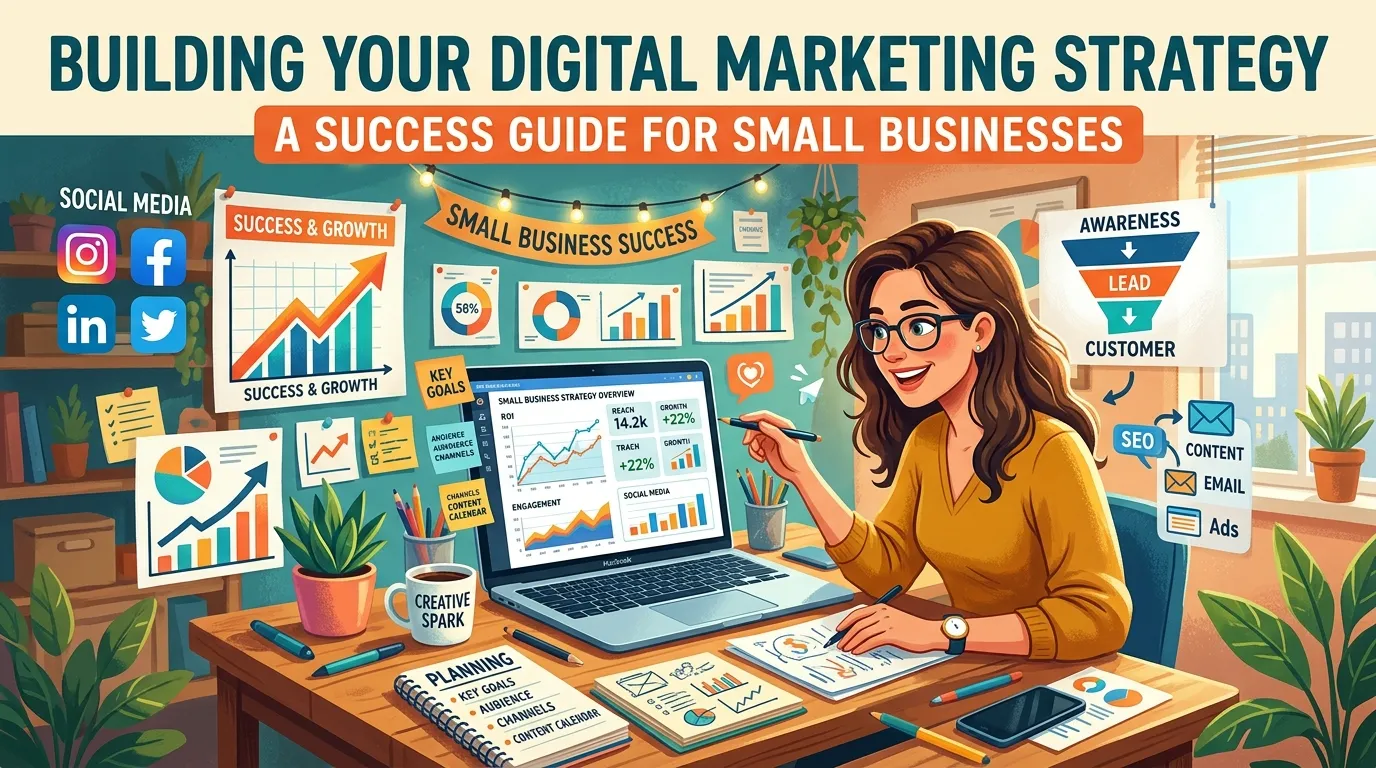
Before you chase tactics, you need a foundation. Jumping straight into posting on social media or launching ads without a plan wastes money and energy. A solid base makes every future decision easier.
Define Your Target Audience
You can’t market to everyone. Trying to do so means your message resonates with no one. Instead, build a clear picture of your ideal customer.
Ask yourself these questions:
- Who are they in terms of age, location, and income?
- What problems keep them up at night?
- Where do they spend time online?
- What words do they use to describe their needs?
- What objections stop them from buying?
Write down the answers. Give your ideal customer a name and a story. When you write an email or design an ad, imagine speaking to this specific person. Your digital marketing for small business efforts will feel personal and land harder.
Clarify Your Unique Value
Why should someone choose you over the shop down the street or the app on their phone? Your unique value proposition answers that question in one clear sentence.
Maybe you offer faster service, friendlier support, or a product built for a niche nobody else serves. Whatever it is, make it obvious across every channel. Confused customers don’t buy, so clarity beats cleverness every time.
Set Goals You Can Measure
Vague goals like “get more customers” lead nowhere. Specific goals give you direction and a way to judge success.
Good marketing goals follow a simple pattern:
- Choose a metric (website visits, leads, sales).
- Attach a number (increase by 25%).
- Set a deadline (within three months).
For example: “Grow email subscribers from 500 to 1,000 over the next quarter.” Now you know exactly what to work toward and whether you succeeded.
Build a Website That Converts
Your website is home base for all your digital marketing for small business activity. Social posts, ads, and search results all point back here. If your site is slow, confusing, or ugly, you lose the visitors you worked hard to attract.
A high-performing small business website needs:
- Fast loading speed so visitors don’t bounce.
- Mobile-friendly design since most traffic comes from phones.
- Clear navigation that helps people find what they need.
- Strong calls to action telling visitors what to do next.
- Trust signals like reviews, testimonials, and security badges.
Think of your website as your best salesperson. It works 24 hours a day, so invest in making it excellent.
Search Engine Optimization for Small Businesses
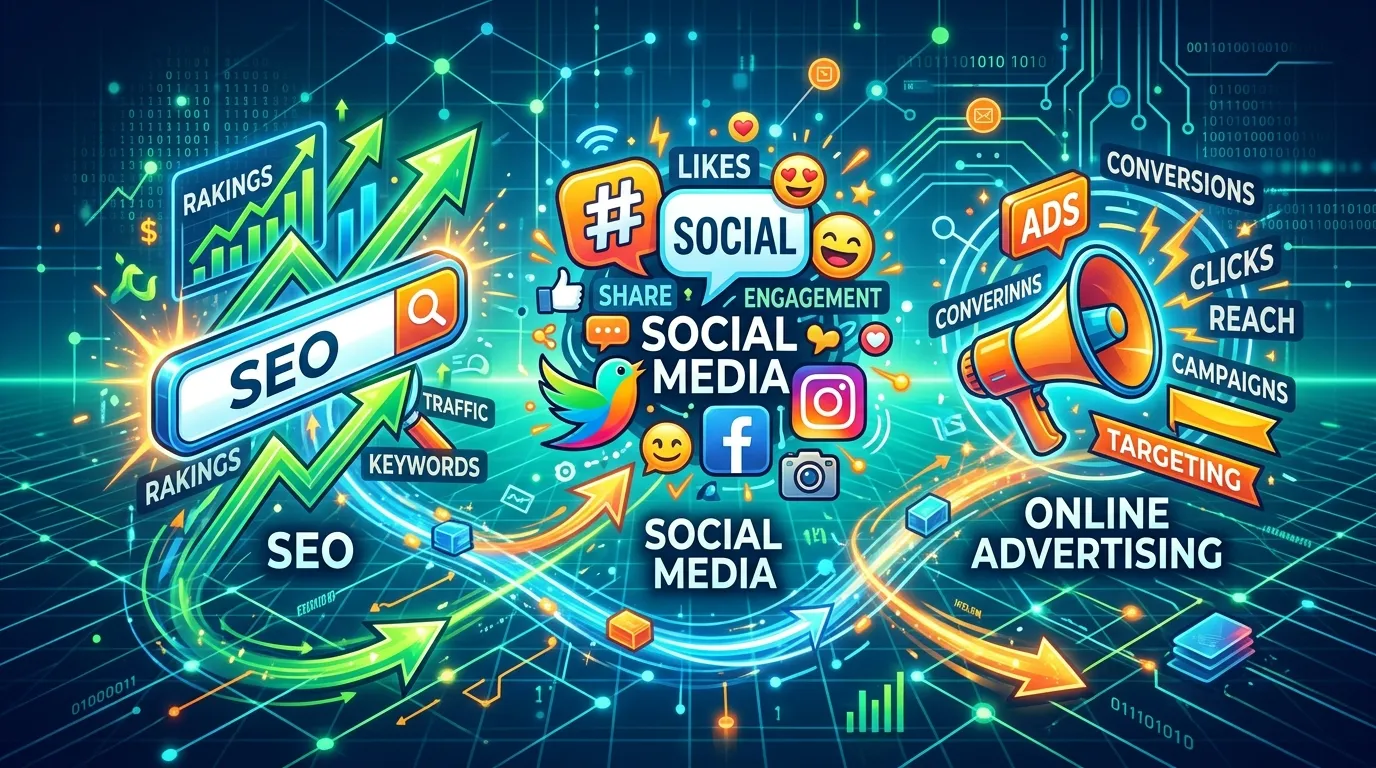
Search engine optimization, or SEO, helps your website show up when people search for what you offer. When done right, it delivers a steady stream of free, high-intent traffic. People who find you through search are actively looking to solve a problem, which makes them valuable prospects.
Understanding How Search Works
Search engines want to give users the best possible answers. When someone types a query, the engine scans billions of pages and ranks them by relevance and quality. Your job is to prove your page deserves a top spot.
Three factors drive most rankings: relevant content that matches searcher intent, technical health that lets search engines read your site, and trust signals like links from other reputable websites. Nail these three, and your visibility climbs.
Keyword Research Basics
Keywords are the phrases people type into search engines. Finding the right ones lets you create content your audience actually wants. Start by brainstorming terms your customers might use, then use free tools to check search volume and competition.
Focus on these keyword types:
- Short-tail keywords: broad terms like “digital marketing” with high volume and high competition.
- Long-tail keywords: specific phrases like “digital marketing for small business owners” with lower volume but easier ranking.
- Local keywords: location-based terms like “bakery in Austin” that drive nearby foot traffic.
Long-tail and local keywords are gold for small business marketing because they attract ready-to-buy customers without forcing you to compete against giant brands.
On-Page SEO Essentials
On-page SEO covers everything you control on your own pages. Small tweaks here can produce big ranking gains.
Optimize these elements on every important page:
- Title tags that include your target keyword and stay under 60 characters.
- Meta descriptions that entice clicks and describe the page accurately.
- Header tags (H1, H2, H3) that organize content logically.
- Image alt text that describes pictures for search engines and accessibility.
- Internal links that connect related pages on your site.
Local SEO for Foot Traffic
If you serve a specific area, local SEO is essential. Claim and optimize your Google Business Profile, keep your name, address, and phone number consistent everywhere, and gather positive reviews from happy customers.
Local search often shows a map with three business listings at the top. Landing in that pack puts you in front of nearby buyers exactly when they’re ready to visit or call.
Crafting a Winning SEO Strategy
A strong SEO strategy ties all these pieces together into a repeatable system. Random optimization produces random results. A deliberate plan compounds over time, building authority that competitors struggle to match.
Start by auditing your current site to find technical issues and content gaps. Then map keywords to specific pages so each one targets a clear search intent. Create genuinely helpful content around those keywords, and earn links by producing resources other sites want to reference.
A Trusted Resource for Deeper Learning
SEO evolves constantly, so learning from proven experts keeps you ahead. For a comprehensive walkthrough, study this in-depth resource. It breaks down modern ranking factors step by step. You can explore the full guide here. SEO Strategy Guide Apply one tactic at a time to avoid overwhelm.
Measuring SEO Progress
SEO takes patience. Results often appear after three to six months of consistent work. Track your progress with key indicators so you stay motivated and know your effort pays off.
Monitor these SEO metrics:
- Organic traffic: visitors arriving from search engines.
- Keyword rankings: where your pages appear for target terms.
- Click-through rate: the percentage of searchers who click your listing.
- Backlinks: quality links pointing to your site.
- Conversions: search visitors who take a desired action.
Review these monthly and adjust your approach based on what the data reveals. Steady improvement beats short bursts of activity every time.
Social Media Marketing That Actually Works
Social media marketing connects you directly with your audience in the places they already hang out. It builds relationships, showcases your personality, and turns customers into loyal fans who spread the word for you.
Choosing the Right Platforms
You don’t need to be everywhere. Spreading yourself across every platform leads to burnout and mediocre results. Instead, pick one or two networks where your audience actually spends time.
Match platforms to your business:
- Facebook: broad reach, great for local businesses and community building.
- Instagram: visual products, lifestyle brands, and younger audiences.
- LinkedIn: business-to-business services and professional networking.
- TikTok: short video content and reaching younger consumers.
- Pinterest: crafts, home goods, recipes, and planning-focused shoppers.
Focus your energy where it counts. Doing one platform well beats doing five poorly.
Creating Content People Care About
The fastest way to fail at social media marketing is to only talk about yourself. Nonstop promotion pushes people away. Instead, follow the rule of giving far more than you ask.
Share a healthy mix of content:
- Educational posts that teach your audience something useful.
- Behind-the-scenes glimpses that humanize your brand.
- Customer stories that build trust through social proof.
- Entertaining content that sparks smiles and shares.
- Occasional promotions that drive sales without overwhelming feeds.
When you consistently provide value, your audience trusts you. That trust converts into sales when they’re ready to buy.
Building Engagement and Community
Social media is a two-way conversation, not a megaphone. Reply to comments, answer questions quickly, and thank people who share your content. These small actions build genuine loyalty.
Ask questions in your posts to spark discussion. Run polls, host live sessions, and celebrate your customers publicly. An engaged community becomes a marketing force that amplifies your message far beyond your own reach.
Consistency Over Perfection
Posting once and disappearing for a month kills momentum. A simple content calendar keeps you consistent without stress. Plan your posts a week or two ahead, batch your content creation, and use scheduling tools to stay organized.
Consistency signals reliability. When followers know you show up regularly, they pay closer attention. Small business marketing thrives on this steady presence.
Online Advertising for Rapid Growth
While SEO and social media build momentum over time, online advertising delivers results fast. Paid ads let you appear in front of your ideal customers immediately, making them perfect when you need quick wins or want to scale proven offers.
Understanding Pay-Per-Click Advertising
Pay-per-click, or PPC, means you only pay when someone clicks your ad. Google Ads is the most popular PPC platform, placing your business at the top of search results for chosen keywords. You bid on terms your customers search, and the highest-quality, best-priced ads win placement.
The beauty of PPC is control. You set your budget, target specific keywords, and turn campaigns on or off instantly. This makes online advertising ideal for testing offers and controlling spend.
Social Media Advertising
Beyond organic posts, social platforms offer powerful paid options. Facebook and Instagram ads let you target people by interests, behaviors, location, and demographics with stunning precision. You can show ads only to people most likely to buy.
Social ads work especially well for building awareness and retargeting. Retargeting shows ads to people who already visited your website, gently reminding them to come back and complete a purchase. This tactic often produces some of the best returns in online advertising.
Setting a Smart Ad Budget
You don’t need thousands of dollars to start. Begin with a small daily budget, learn what works, then scale winners. Many successful campaigns start at just five or ten dollars per day.
Follow these budgeting principles:
- Start small and increase spend only on proven ads.
- Track cost per acquisition to know what a customer costs you.
- Kill losing ads quickly to stop wasting money.
- Reinvest profits from winners to fuel growth.
Comparing Digital Marketing Channels
Every channel has strengths and trade-offs. The table below compares the main options to help you decide where to focus your digital marketing for small business efforts.
|
Channel |
Cost |
Time to Results |
Best For |
Effort Level |
|---|---|---|---|---|
|
SEO |
Low ongoing |
3–6 months |
Long-term free traffic |
High |
|
Social Media |
Free to low |
1–3 months |
Brand building, community |
Medium |
|
Online Advertising |
Pay per result |
Immediate |
Fast sales, testing |
Medium |
|
Email Marketing |
Very low |
Weeks |
Repeat sales, loyalty |
Low |
|
Content Marketing |
Low |
3–6 months |
Authority, SEO support |
High |
Use this table as a starting point. Most successful businesses combine several channels so each one supports the others. SEO and content feed your social feeds, ads capture quick wins, and email keeps customers coming back.
Email Marketing: Your Most Valuable Asset
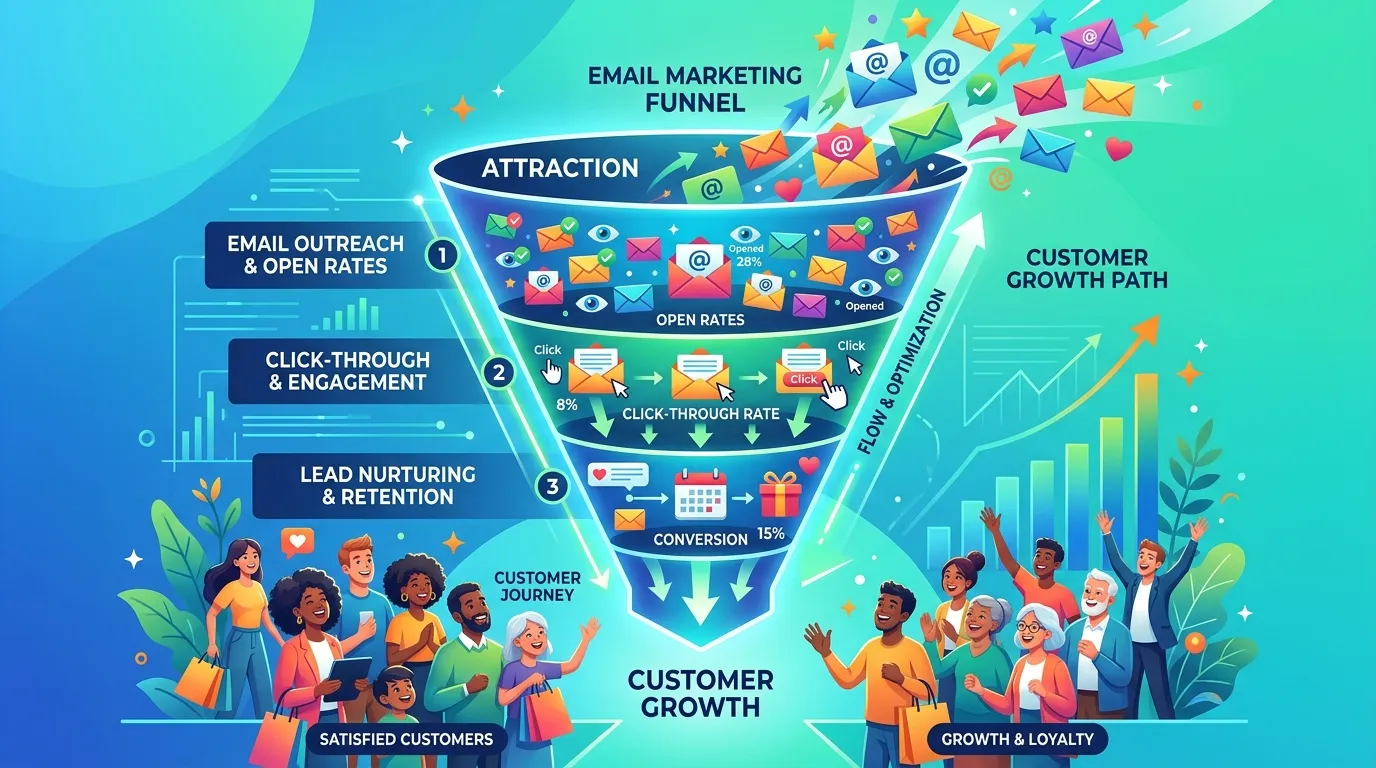
Email marketing consistently delivers the highest return of any digital channel. Unlike social media followers, your email list is something you own outright. No algorithm can hide your message or take your audience away.
Building Your Email List
Your list is the heart of email marketing, so grow it deliberately. Offer something valuable in exchange for an email address. This is called a lead magnet.
Effective lead magnets include:
- Discount codes for first-time buyers.
- Free guides or checklists solving a specific problem.
- Exclusive content unavailable elsewhere.
- Free tools or templates your audience finds useful.
Place signup forms on your website, at checkout, and in your social profiles. Every new subscriber is a future customer you can reach anytime for free.
Writing Emails People Open
The average inbox overflows with messages, so yours must stand out. Your subject line determines whether people open or ignore your email. Keep it short, spark curiosity, and hint at real value inside.
Once opened, deliver on your promise. Write like you’re talking to a friend, keep paragraphs short, and include one clear call to action. Every email should give the reader something worthwhile, whether that’s a tip, a story, or a genuine offer.
Automating Your Email Marketing
Automation lets you send the right message at the right time without lifting a finger. Set up sequences that trigger based on customer actions, then let the system nurture relationships around the clock.
Powerful automations to set up:
- Welcome series greeting new subscribers.
- Abandoned cart reminders recovering lost sales.
- Post-purchase follow-ups encouraging reviews and repeat orders.
- Re-engagement campaigns winning back inactive subscribers.
These sequences run in the background, making email one of the most efficient tools in your small business marketing toolkit.
Content Marketing That Builds Authority
Content marketing means creating helpful information that attracts and engages your audience. Blog posts, videos, guides, and podcasts all build trust, improve SEO, and give people reasons to keep coming back to your brand.
Why Content Matters
Great content positions you as an expert. When you consistently answer your audience’s questions, they see you as the go-to source in your field. This authority makes selling easier because people buy from those they trust.
Content also fuels your other channels. Blog posts give you social media material, boost your SEO strategy, and provide value for your email newsletters. One strong piece of content works across your entire digital marketing for small business system.
Types of Content to Create
Variety keeps your audience engaged and reaches different learning styles. Mix formats to maximize your impact.
Consider creating:
- How-to guides that solve specific problems step by step.
- Case studies showing real results you delivered.
- Videos demonstrating products or sharing tips.
- Infographics that make data easy to digest.
- FAQs answering the questions customers ask most.
Planning a Content Calendar
Random content produces random results. A content calendar keeps you organized and consistent. Plan topics around your customers’ questions, seasonal trends, and business goals.
Map out your content a month ahead. Decide what to publish, when, and on which channels. This planning prevents last-minute scrambles and ensures your content marketing supports your broader strategy.
Measuring Success and Optimizing Results
You can’t improve what you don’t measure. Tracking the right metrics reveals what works, what doesn’t, and where to invest next. This is where digital marketing for small business truly shines compared to traditional methods.
Key Metrics to Track
Focus on numbers that connect to real business outcomes. Vanity metrics like follower counts feel good but rarely pay the bills. Instead, track metrics that reflect actual value.
Prioritize these measurements:
- Website traffic and where it comes from.
- Conversion rate: visitors who take action.
- Cost per lead across your channels.
- Customer lifetime value compared to acquisition cost.
- Return on investment for each marketing activity.
Using Analytics Tools
Free tools like Google Analytics reveal exactly how people find and use your website. You’ll see which pages perform best, where visitors drop off, and which channels drive the most valuable traffic.
Set up goal tracking to measure conversions directly. When you know that a specific blog post or ad drives sales, you can confidently invest more in what works. Data turns marketing from guesswork into a science.
The Power of Testing
The best marketers never stop testing. Small changes to headlines, images, or calls to action can dramatically improve results. This process, called A/B testing, compares two versions to see which performs better.
Test one element at a time so you know what caused the change. Over months, these small improvements compound into major gains. Continuous testing is how ordinary campaigns become extraordinary.
Putting It All Together
Now you have the pieces. The final step is combining them into a cohesive plan that fits your business, budget, and goals. Don’t try to do everything at once. Start with one or two channels, master them, then expand.
A Simple Starting Roadmap
If you’re just beginning your digital marketing for small business journey, follow this sequence:
- Build a solid website that converts visitors into customers.
- Claim your local listings and optimize for local search.
- Choose one social platform and post consistently.
- Start collecting emails with a compelling lead magnet.
- Test small paid ads once you understand your audience.
Master each step before adding the next. This measured approach prevents overwhelm and builds a sustainable system.
Staying Consistent for Long-Term Growth
The businesses that win at digital marketing aren’t necessarily the smartest or best funded. They’re the most consistent. Marketing rewards those who show up day after day, learn from their data, and keep improving.
Progress compounds. The blog post you write today keeps attracting visitors for years. The email list you build becomes more valuable every month. The reputation you earn on social media opens doors you can’t imagine yet.
Conclusion
Digital marketing for small business owners is no longer optional. It’s the most affordable, measurable, and powerful way to reach customers and grow. You’ve learned how to build a foundation, master SEO, use social media, run ads, leverage email, and measure everything that matters.
The key takeaways are simple: know your audience, provide real value, stay consistent, and let data guide your decisions. You don’t need a huge budget or a marketing degree. You need a clear plan and the discipline to follow it.
Pick one strategy from this guide and start today. Small, steady steps lead to remarkable growth. Your future customers are searching, scrolling, and waiting to find you. Go make sure they do.
Frequently Asked Questions
What is digital marketing for small business?
Digital marketing for small business means using online channels to promote your products and reach customers. It includes SEO, social media, email, and online advertising. These tools let small companies compete with larger brands affordably. Best of all, you can track every result and adjust as you learn.
How much should a small business spend on digital marketing?
Most experts suggest allocating 7 to 10 percent of revenue to marketing. Newer businesses may invest more to build momentum quickly. The good news is you can start small, testing channels with modest budgets. As you find what works, reinvest profits to scale your best-performing efforts.
Which digital marketing channel works best for small businesses?
There’s no single best channel since it depends on your audience and goals. SEO delivers free long-term traffic, while online advertising brings fast results. Social media marketing builds community, and email offers the highest return. Most successful businesses combine several channels so each one strengthens the others.
How long does it take to see results from digital marketing?
Timelines vary by channel and effort. Paid advertising can drive traffic and sales almost immediately. SEO and content marketing usually take three to six months to gain traction. Email and social media often show results within weeks. Consistency accelerates every timeline, so keep showing up.
Do I need to hire an agency for small business marketing?
Not necessarily, especially when starting out. Many small business owners handle their own marketing using free and affordable tools. As you grow busier, outsourcing specific tasks can free your time. Consider an agency once your budget allows and your needs outpace your available hours.
How important is social media marketing for small businesses?
Social media marketing is highly valuable for building relationships and brand awareness. It lets you connect directly with customers where they spend time. However, you don’t need every platform. Choose one or two where your audience is active and focus your energy on posting consistently and engaging genuinely.
What is an SEO strategy and why do I need one?
An SEO strategy is a deliberate plan to improve your search visibility. It ties together keyword research, quality content, and technical optimization. Without a plan, your efforts stay scattered and results suffer. A clear SEO strategy compounds over time, building authority that brings steady free traffic to your website.
Can I do digital marketing with a very small budget?
Absolutely. Many powerful tactics cost little or nothing to start. You can optimize your website, post on social media, and grow an email list for free. Even paid ads can begin at just a few dollars a day. Creativity and consistency often matter more than a large budget.
How do I measure if my digital marketing is working?
Track metrics that connect to real business goals. Watch your website traffic, conversion rate, and cost per lead closely. Free tools like Google Analytics reveal how people find and use your site. Focus on numbers that drive sales, not vanity metrics like follower counts alone.
What is the difference between SEO and online advertising?
SEO earns free, organic traffic by ranking your pages in search results over time. Online advertising pays for immediate placement and instant visibility. SEO builds slowly but delivers lasting value, while ads work fast but stop when you stop paying. Combining both gives you quick wins and long-term growth.
How often should I post content for my small business?
Consistency matters more than frequency. Posting quality content two or three times a week often works well. For blogs, one strong post weekly can drive meaningful results. Choose a schedule you can maintain long-term. It’s better to post reliably than to burn out chasing an impossible pace.
Should small businesses use email marketing?
Yes, email marketing consistently delivers the highest return of any channel. Unlike social followers, your email list is an asset you fully own. You can reach subscribers anytime without paying for placement. Automated sequences nurture relationships and drive repeat sales, making email essential for sustainable small business marketing.
